Start with the complete load
Find the finished frame weight, including glazing and contents. A new mat or a switch from acrylic to glass can change that load. Do not assume that a hook suitable for the old frame remains suitable for a replacement of similar outside dimensions.
Identify the wall construction and the intended mounting system. Drywall, masonry, and other surfaces call for different attachments. Follow the fastener and frame manufacturer's instructions, and use professional installation when the weight, size, or location makes the task uncertain.
Look at the frame-side fittings
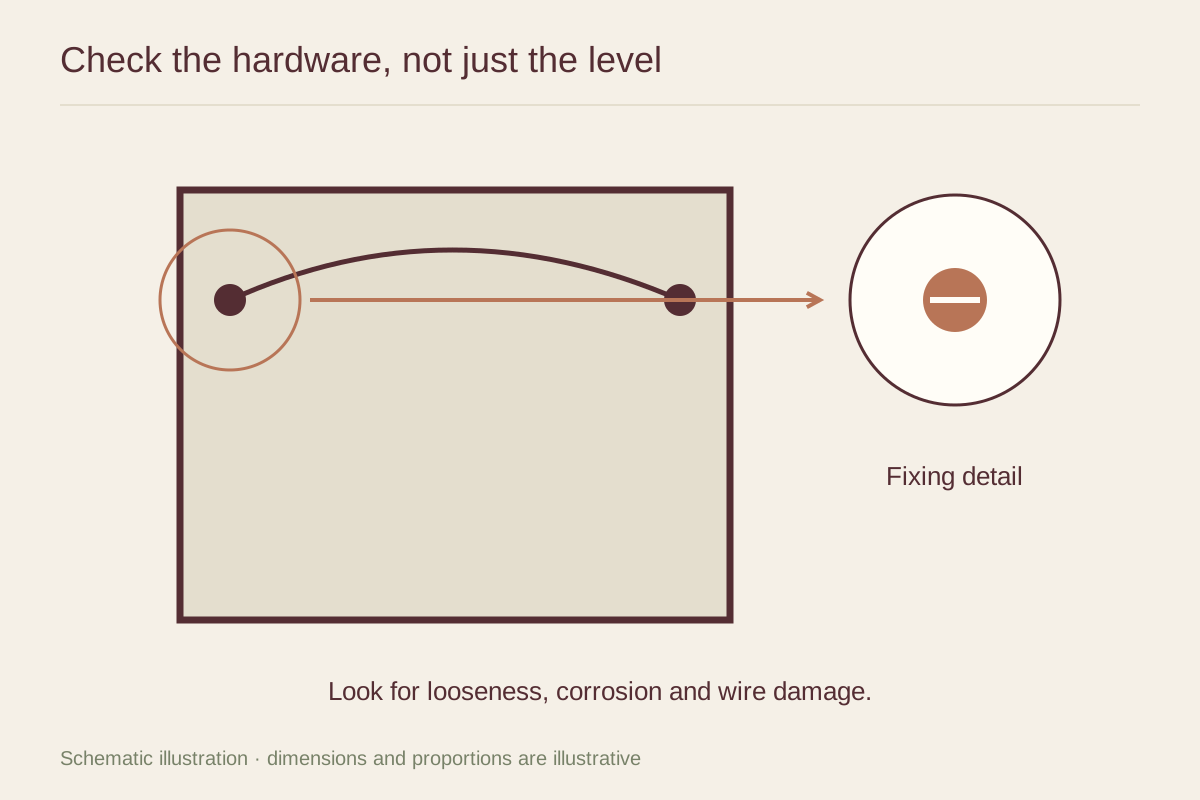
With the frame safely supported, inspect rings, screws, wire, rails, and other fittings for looseness, corrosion, distortion, or visible damage. Check that the frame corners are sound and the backing is held securely. A damaged fitting should be assessed or replaced appropriately before the picture returns to the wall.
Do not improvise by adding wire to hardware designed for direct hanging or by combining unrelated parts. The arrangement should function as a system. If you cannot determine how it was intended to attach, ask the framer rather than experimenting while holding the picture aloft.
Check the wall-side attachment
Look for movement, cracking, enlarged holes, or signs of dampness around the attachment point. A fastener that has loosened in the wall should not simply be pushed back into the same damaged hole. Have the substrate and installation assessed before reusing that location.
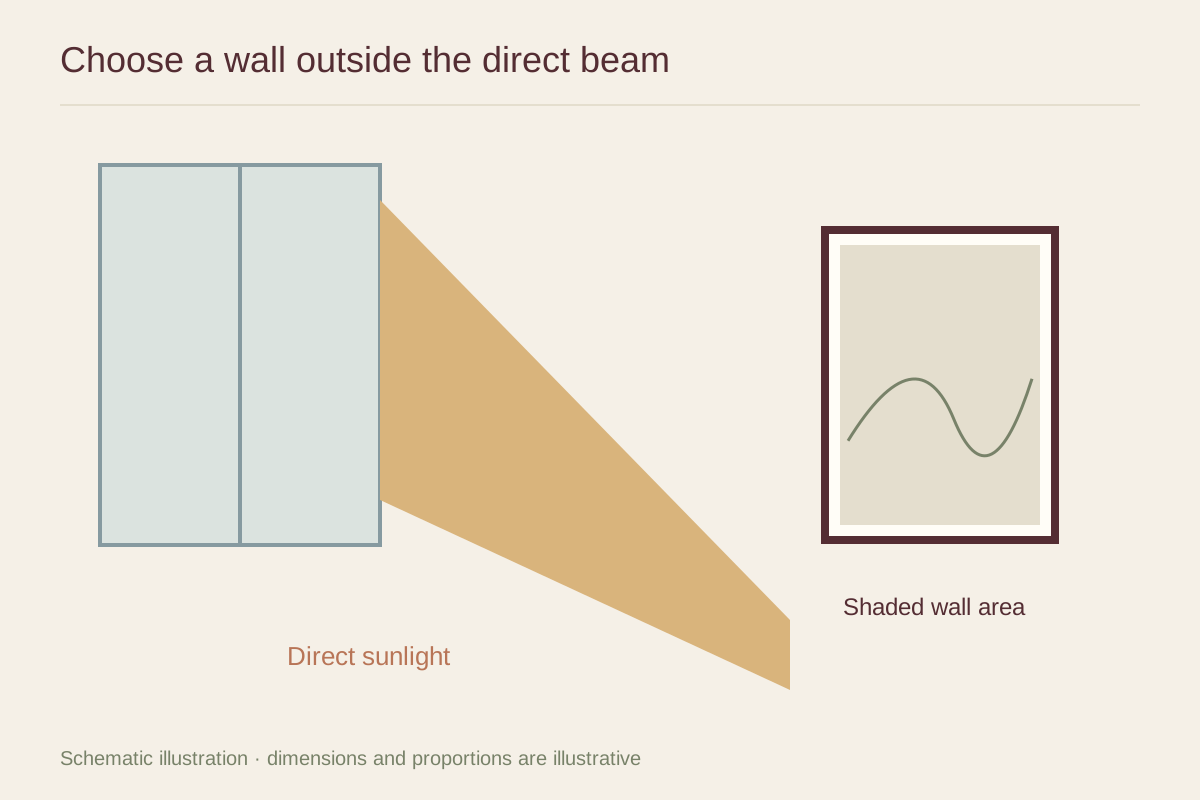
Consider the new furniture arrangement. A chair back, opening door, or tall lamp may now strike a frame that was previously clear of traffic. The hardware can be sound while the location has become unsuitable. Use the refresh to check both.
Finish with a controlled rehang
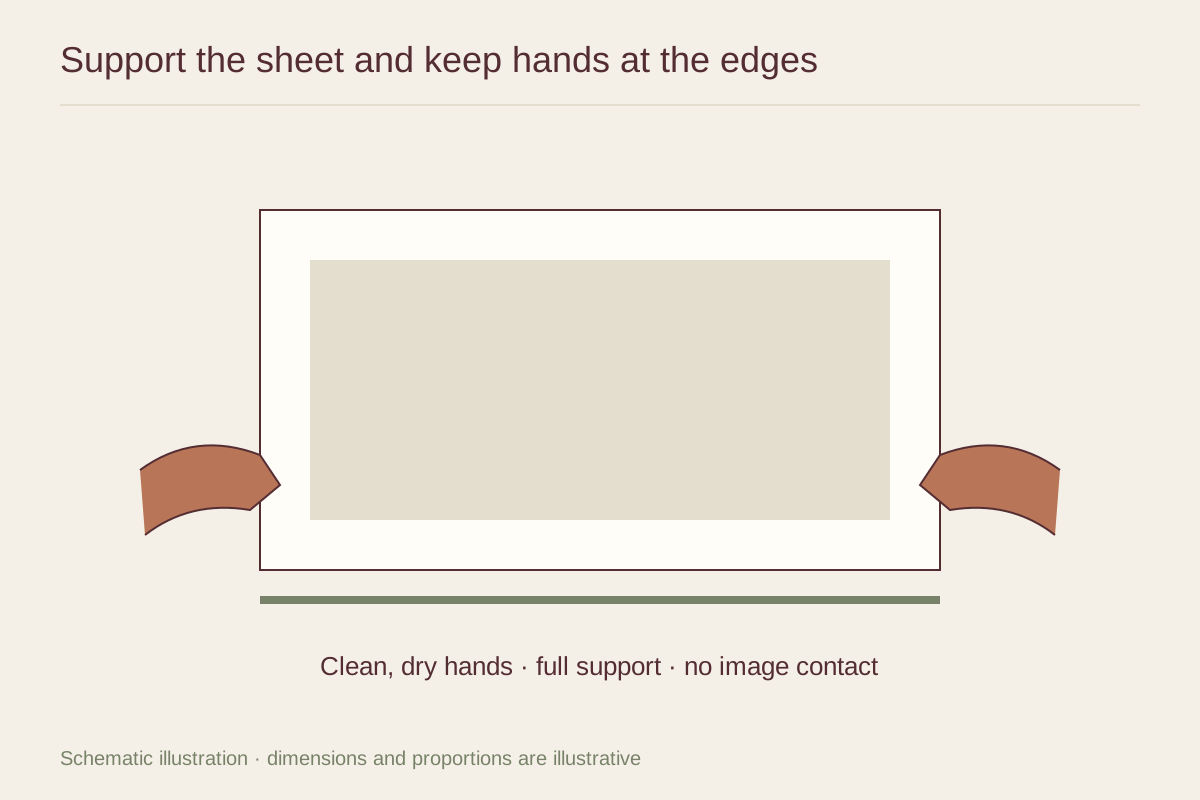
Have enough assistance to place the frame without scraping the wall or missing an attachment. Confirm that all intended points are engaged and that the frame is stable. Avoid relying on the fact that it looks level from the front as proof that it is secure.
Record the weight and mounting method with the frame details. If a professional installs it, keep the instructions and ask what signs would warrant another check. A concise record makes future room changes easier and reduces the temptation to treat every existing hook as a universal hanging point.