Look at the room from the active routes
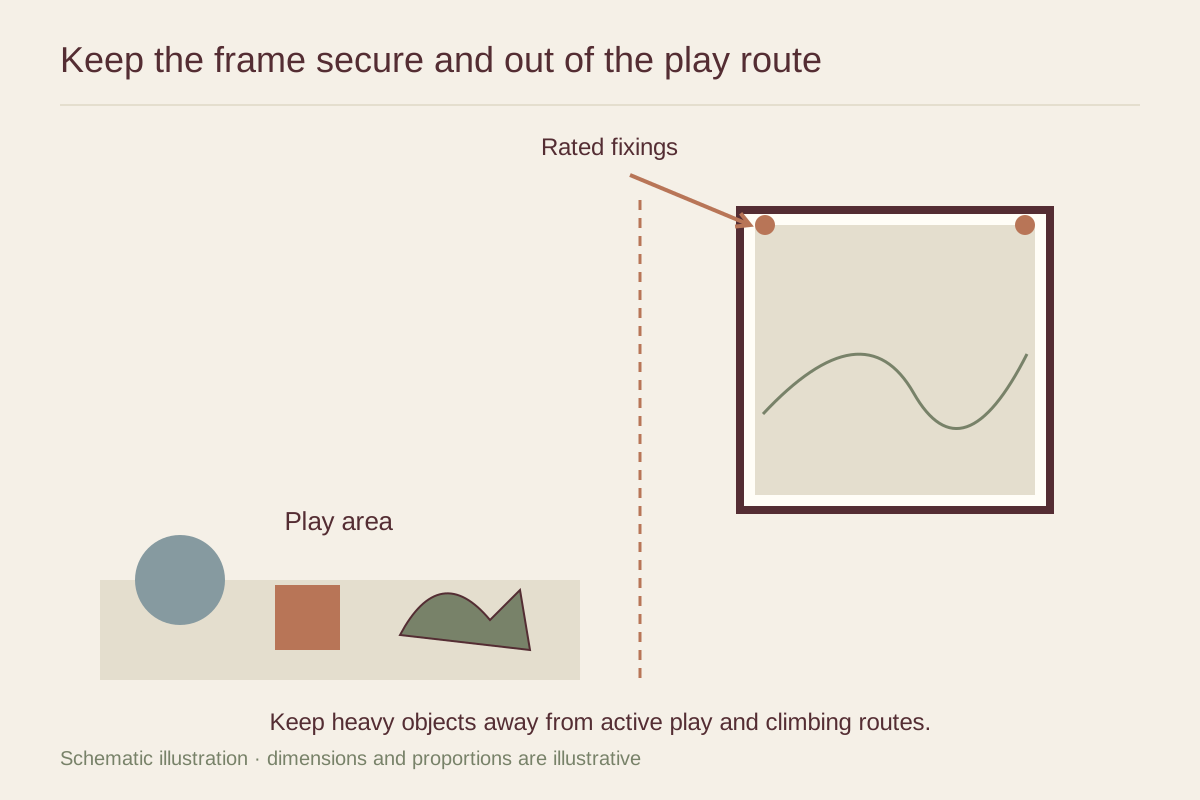
Notice where children run, where a pet jumps onto furniture, and where doors or chair backs swing. A frame above a narrow console may be reachable from the furniture beneath it. A low picture beside a hallway corner may be hit by a bag or toy even when nobody intends to touch it.
Use a paper template while testing the location. Avoid leaning a glazed frame on the floor to see how it looks in an active room. Keep the actual object in a secure place until the position and installation are ready.
Choose glazing with the location in mind
Acrylic can reduce weight and the risk associated with glass shattering, but it is not a complete safety system. The frame still needs appropriate strength and secure attachment. Ask a framer about the exact glazing and construction for a large or accessible display.
Do not assume an unglazed print solves every concern. An exposed surface may be vulnerable to touching, scratching, or splashes. The choice should consider both people and the artwork, including whether the print's medium is compatible with the proposed glazing and spacing.
Use the intended mounting system
Match attachments to the wall construction and total framed weight, following the relevant instructions. Do not rely on a decorative ledge or unsecured lean in a place where the frame can be knocked over. A heavy or awkward piece may warrant professional installation.
Keep cords, loose wire, and removable parts from dangling where they can be reached. Confirm that all intended attachment points are engaged. A frame that looks straight can still be insecure if a hook or rail was missed during installation.
Recheck as the room changes
A child's reach changes, a pet discovers a new perch, and a chair moves to a different wall. Reassess the display when those changes happen. The original installation may remain sound while the surrounding furniture makes the picture newly accessible.
Inspect the frame after a bump and stop using a damaged assembly. If glazing cracks or parts come loose, keep children and pets away and arrange safe handling or repair. Do not cover a broken corner and rehang it because the image itself looks fine.
Choose a less vulnerable place when needed
Some locations are better suited to another kind of decoration. If a wall is repeatedly struck or within an active play area, move the framed print to a more protected position. You can preserve the room's color relationship with another appropriate object while keeping the picture somewhere it can be enjoyed without repeated incidents.
The aim is a display that fits the way the household actually uses the room. A workable location and sound installation are easier to maintain than a fragile arrangement that depends on everyone avoiding an ordinary path.