Record its condition and construction
Photograph the front, back, corners, and hanging arrangement while the frame is still safely supported. Note existing chips, scratches, loose joints, or other changes. Save the glazing product and mounting details if you have them. These records help distinguish an old issue from something that happens during the move.
Check whether the frame is sound enough to travel. Cracked glazing, a loose backing, or an artwork that appears to have shifted is a reason to consult a framer first. Wrapping does not repair a weak assembly, and carrying it can make a small problem much worse.
Arrange a clear handling route
Measure doors, stairs, and the vehicle space for a large piece. Clear obstacles and identify a stable place to set the frame down at both ends. Have enough people to control its size and weight without gripping the decorative surface or lifting by hanging wire.
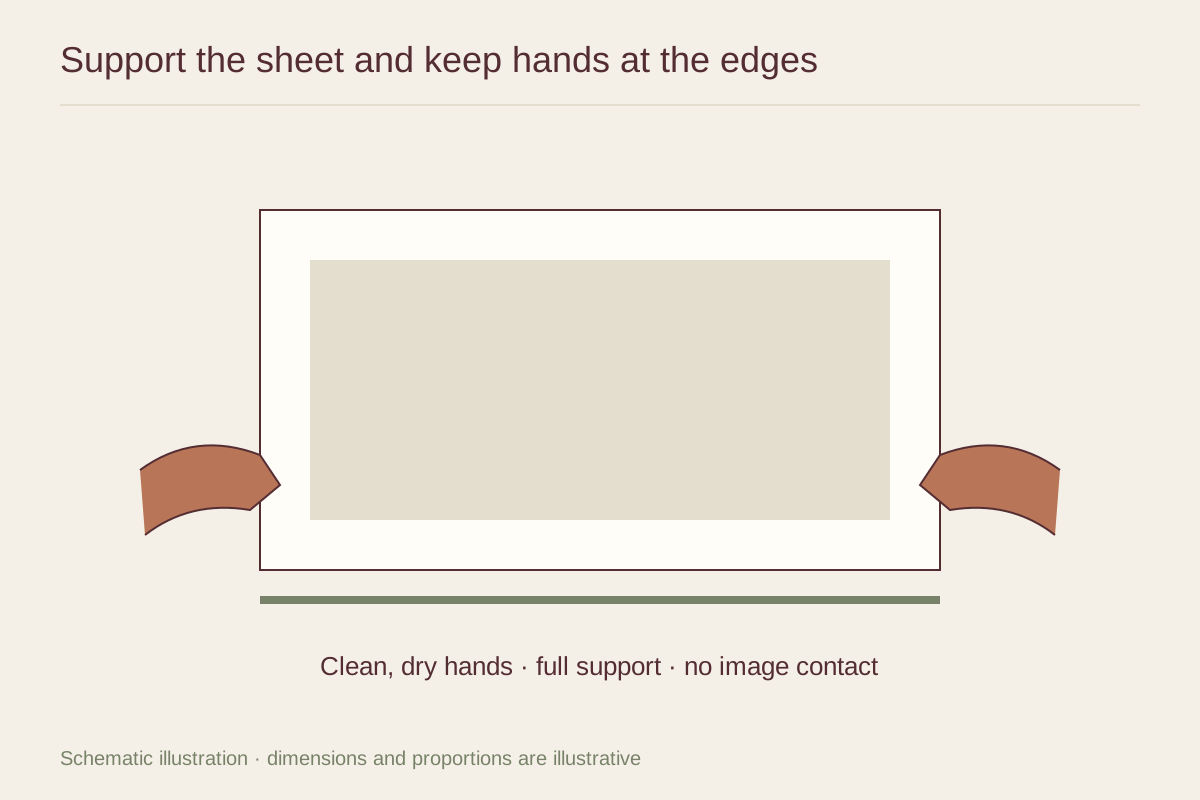
Support the structural frame with both hands as appropriate to its construction, keeping pressure off the glazing and artwork. Do not carry several frames in one arm or balance a frame against loose furniture while opening a door. If the object is beyond comfortable control, stop and arrange experienced help.
Choose packing for the object
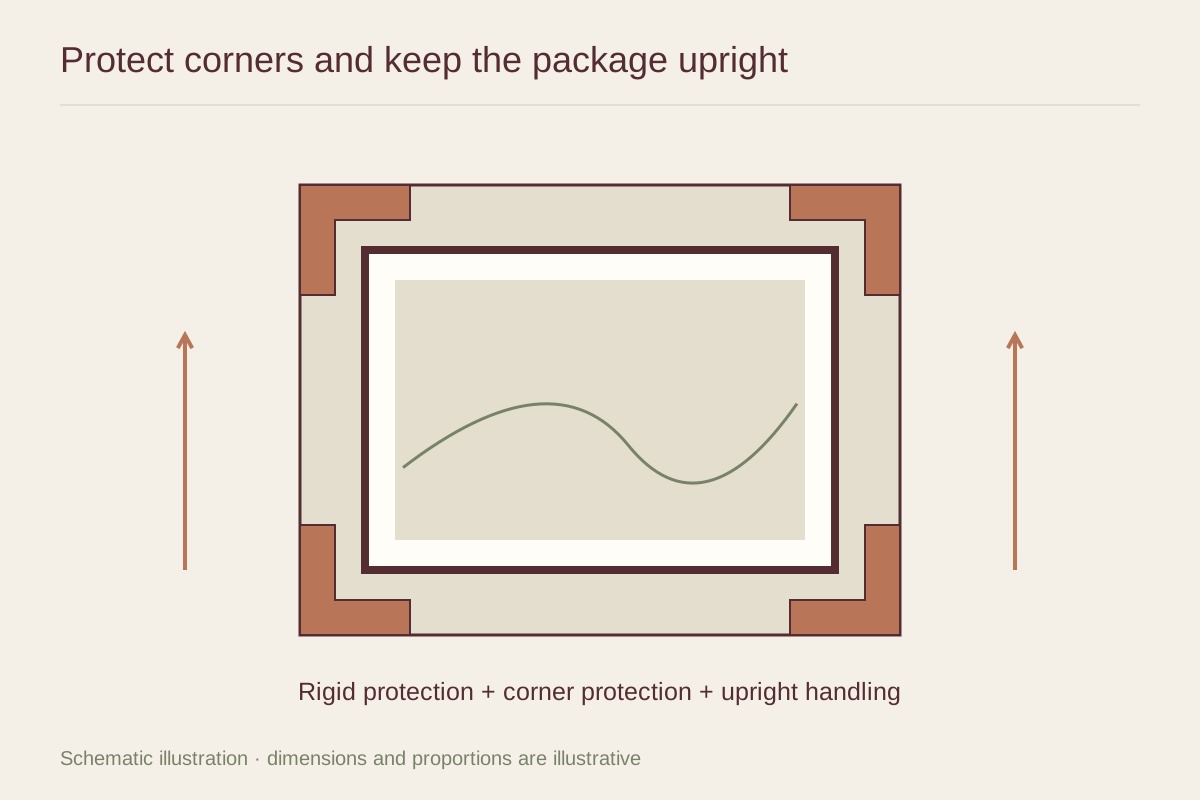
Use a clean protective system that prevents movement, protects corners, and avoids pressure against the front. Do not place adhesive tape on the frame finish, glazing, or artwork. Do not assume that bubble wrap or another textured material can rest directly against every surface without marking it.
For a valuable or delicate frame, ask a professional packer or conservator to specify the contact materials and support. CCI's guidance on wrapping paintings emphasizes that the object's condition and frame adequacy must be considered before wrapping. The same planning principle is useful for a framed paper work, although the exact packing method should fit its construction.
Control movement in the vehicle
A wrapped frame still needs to be restrained so it cannot slide, fall, or be crushed by another box. Keep heavy objects from leaning against it. Use a transport arrangement appropriate to the size and construction, and have a professional advise on large glass-fronted work.
Avoid leaving the frame in a hot parked vehicle or in a damp temporary location. Plan the trip so the artwork can move into a suitable indoor space promptly. If a move involves major environmental changes or long storage, ask a conservator or art transport service about the additional requirements.
Prepare the new wall before unpacking everything
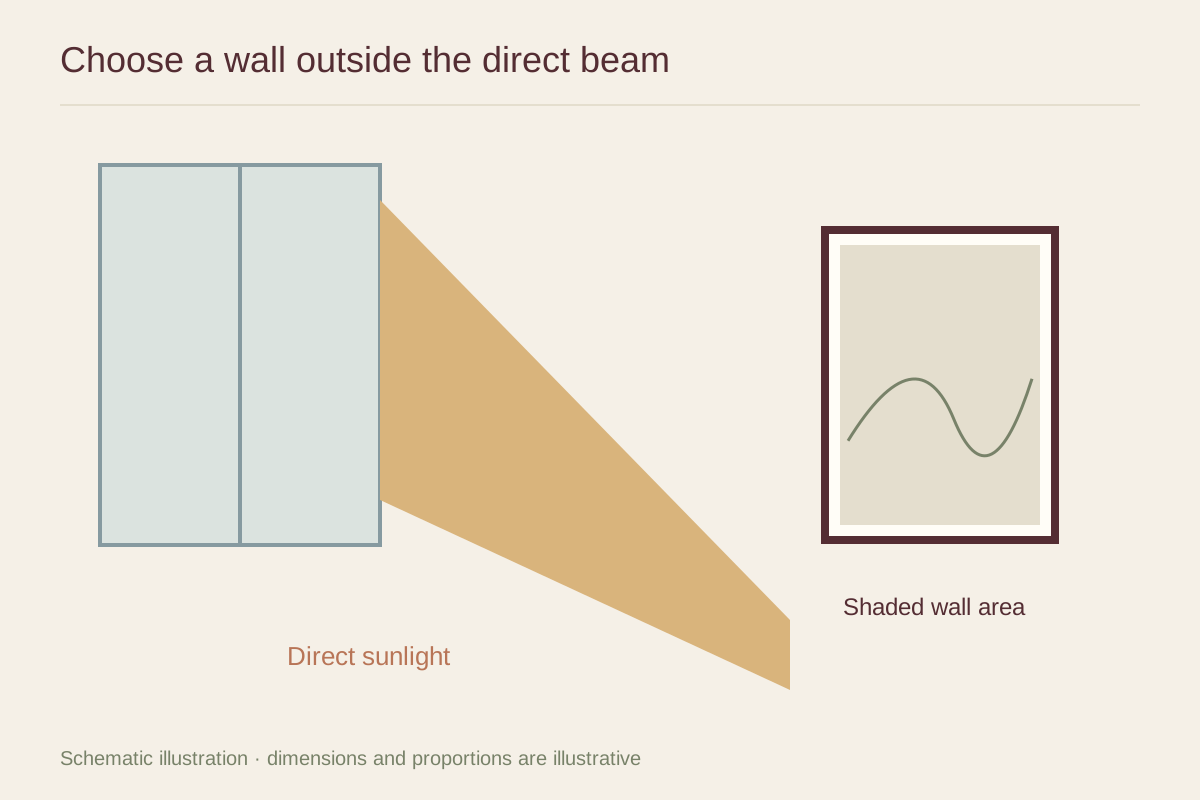
Confirm that the new location is dry, out of direct sun, and clear of heat sources and traffic. Check the wall construction and choose attachments for the complete framed weight. Hardware that worked in the old home may not suit the new wall.
Use the condition record and outside measurements to plan placement. If the final wall is not ready, arrange a protected temporary storage space rather than leaning the frame where movers, children, or pets can knock it over. Keep the packaging label and installation parts associated with the correct frame.
Inspect on arrival
Unpack in a clean, stable area and compare the frame with the earlier photographs. Look for shifted contents, cracked glazing, loose corners, or new marks. Do not immediately hang a piece that seems changed. Document the concern and consult the appropriate professional before further handling.
Retain useful packing materials until the move is complete and the frame has been checked. Once installed, verify that its attachments are fully engaged and stable. A careful move ends with a suitable new location and a sound installation, not merely with the frame arriving in the correct room.