Inspect and identify before storing
Check for loose corners, cracked glazing, projecting screws, and retaining tabs that could catch another frame. Have damaged glass or an unstable frame dealt with before putting it among sound pieces. Do not use storage wrapping to conceal a defect that someone may later discover by touch.
Label each frame's protective enclosure with its fitting size, outside size, orientation, and glazing type if known. Keep any care instructions with that record. A frame that accepts an 8 by 10 print may have a much larger outside footprint, so recording both dimensions prevents repeated unwrapping to measure it.
Separate surfaces and support the frames
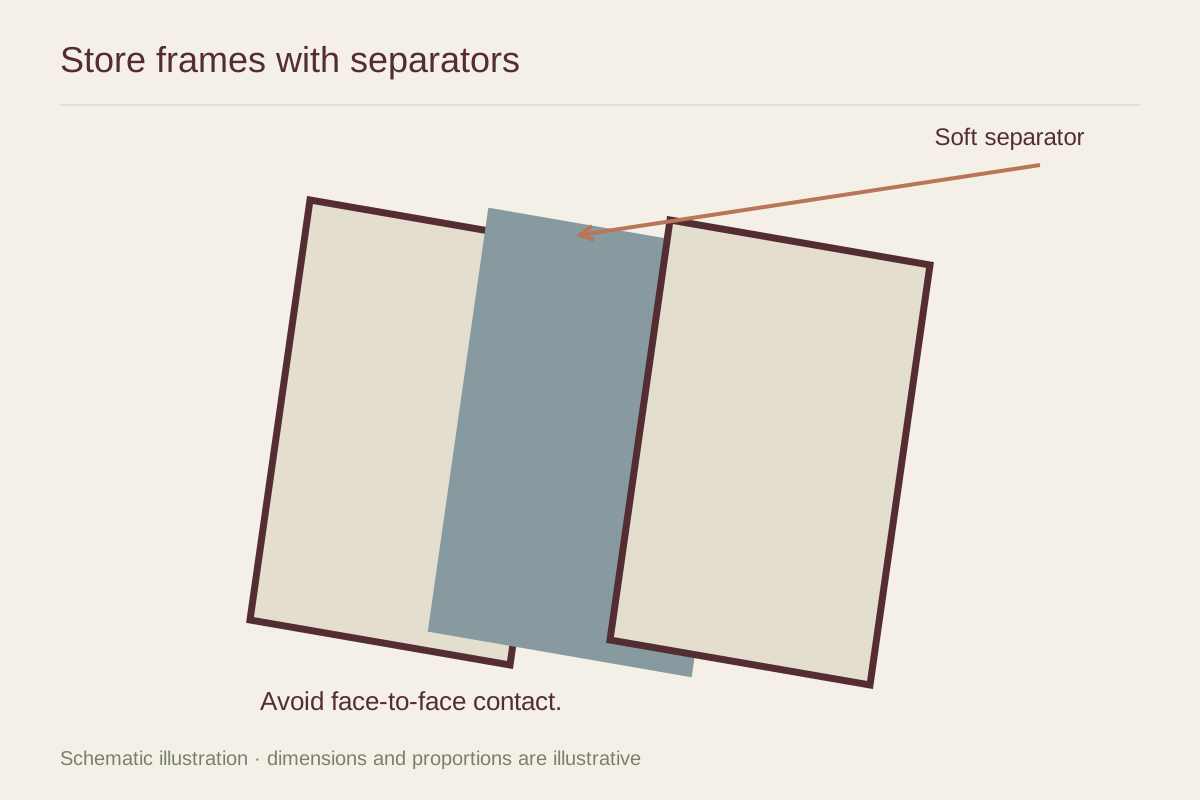
Use clean protective materials appropriate to the frame finish and glazing, and avoid direct contact between neighboring fronts. Textured packing material can mark some surfaces if pressed against them. Keep tape on the packaging rather than on the molding or glazing.
Choose a stable storage arrangement that prevents frames from sliding or tipping. Do not stack heavy frames on top of thin moldings or allow hardware to press into another pane. Large, ornate, or valuable frames may need a purpose-made rack or professional packing advice rather than a household shelf arrangement.
Make retrieval uncomplicated
Store the frames in a dry, stable indoor location away from leaks and busy household routes. Keep the floor area clear so a frame can be lifted with adequate control. If retrieving one requires moving several unstable pieces, change the arrangement before continuing.
Put removable clips or brackets in labeled containers associated with the correct frame, without leaving loose metal parts inside the glazing cavity. When a frame is used again, inspect it and confirm that its hardware suits the new contents and weight. Storage records are useful, but they do not replace a fresh check of the assembled object before hanging.