Begin with the bed in its normal form
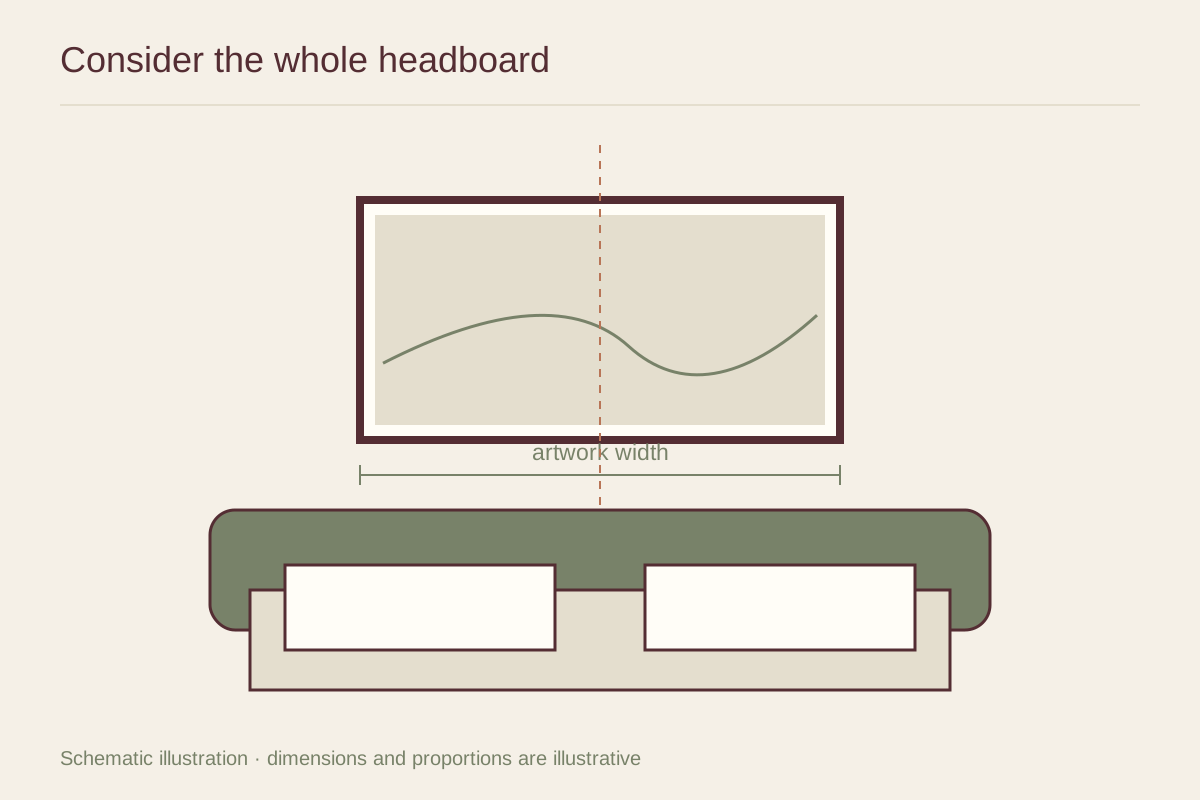
Make the bed as it is usually used, including the pillows and cushions that remain there during the day. Measure the headboard's width and height. A paper template placed above a bare mattress can suggest a lower position than will work with the real bed in use.
Sit up against the headboard and note where your head and hands reach. Keep the frame out of ordinary contact when changing pillows or reaching behind the bed. Do not choose a gap solely because it resembles a styled photograph; the people and furniture in your room determine the useful clearance.
Choose one group shape
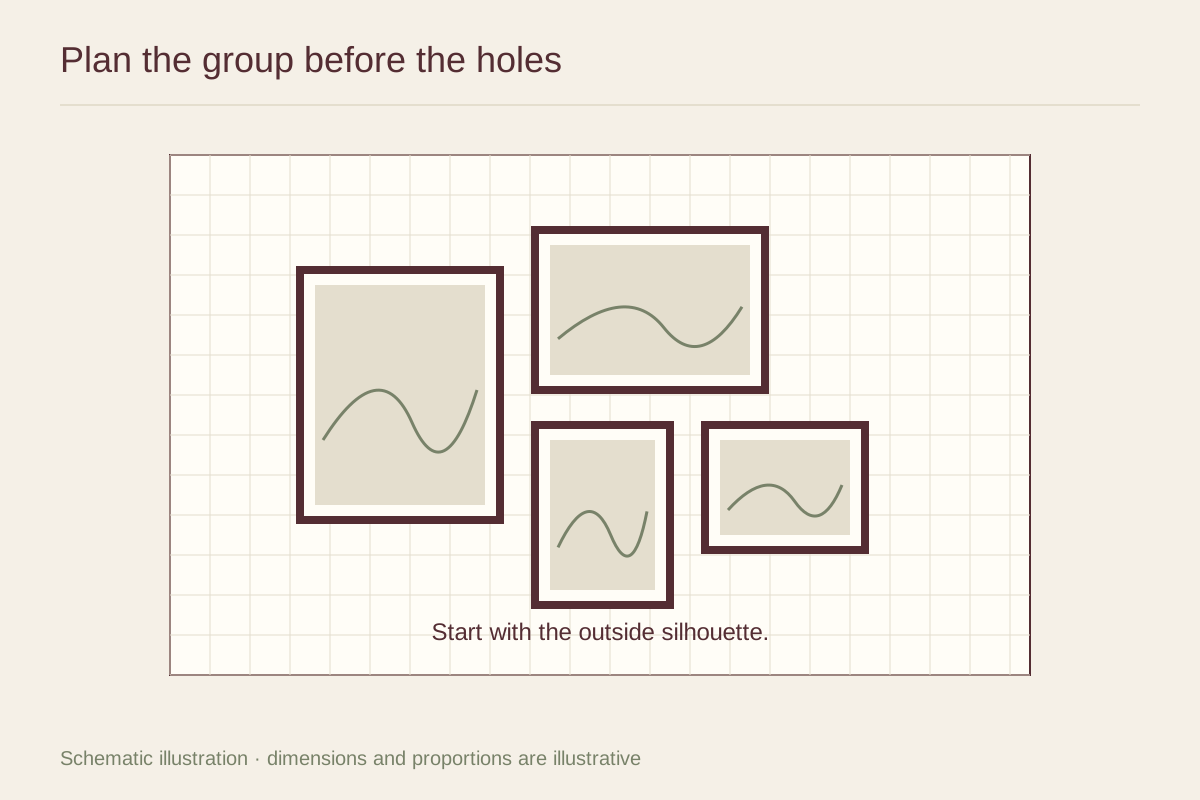
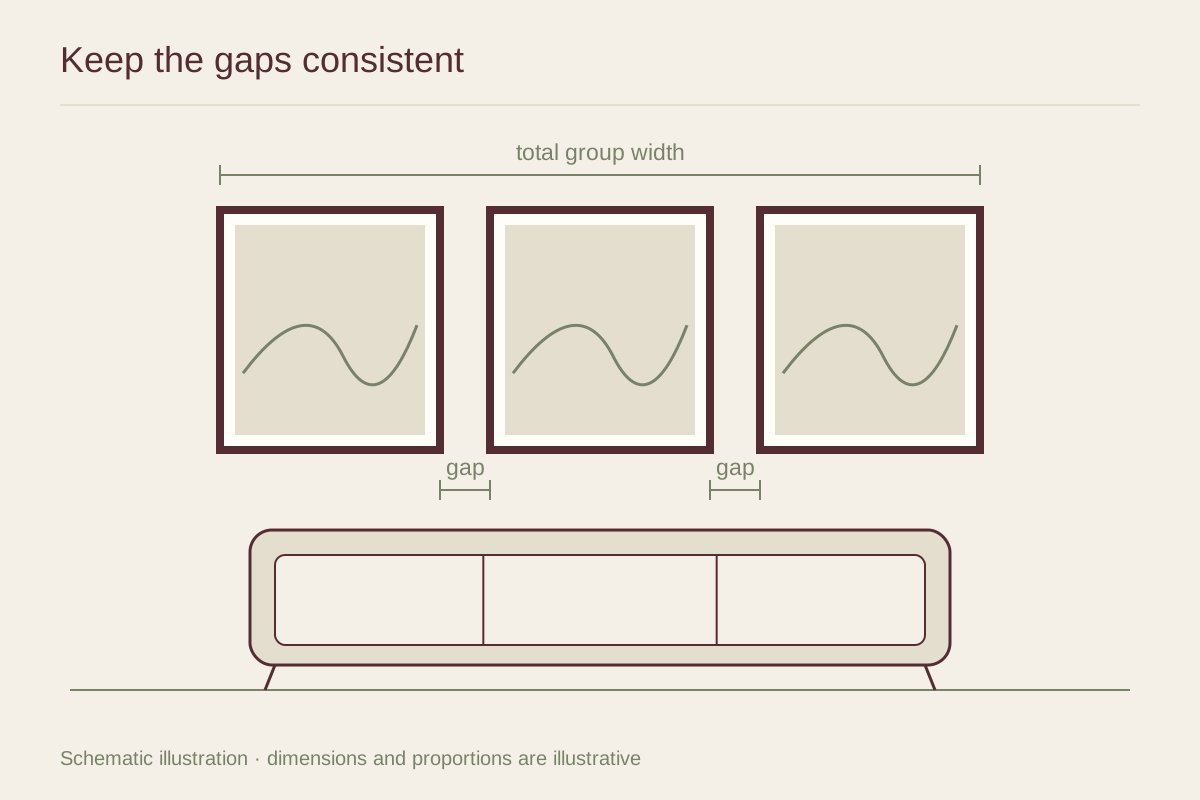
A single horizontal work can provide a calm line above a wide headboard. Two or three pictures can create a lighter rhythm, while a tall work may suit a narrower bed or an asymmetrical arrangement. Test full outside dimensions, including mats and frames, before ordering.
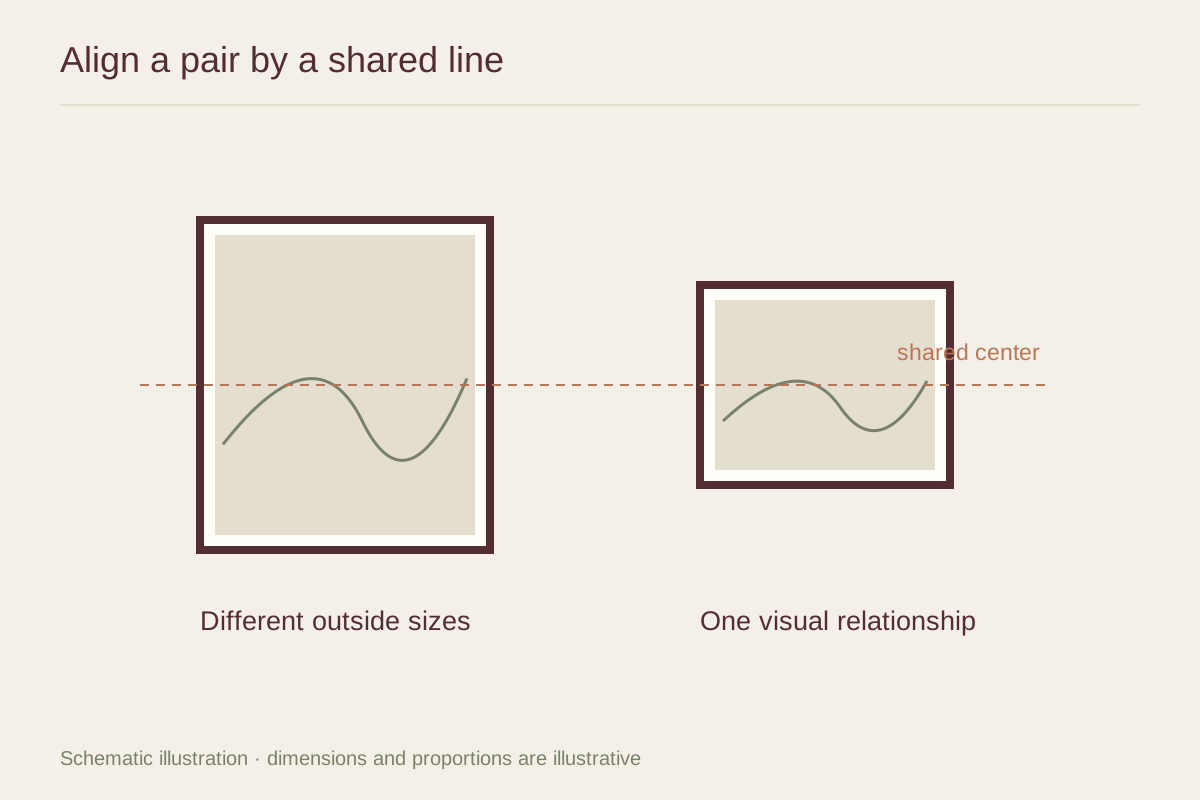
Relate the grouping to the bed and nearby tables rather than automatically centering it on the full wall. If a window occupies one side, the usable wall may be uneven. A deliberate offset can work, but compare it from the doorway and from the opposite side of the room.
Check the imagery as well as the rectangles. A dark area on one side of a print or a strongly directional subject can make a geometrically centered work feel unbalanced. Small adjustments may help, but avoid chasing perfect symmetry when the room itself is comfortably asymmetrical.
Treat overhead mounting as a real constraint
Know the full framed weight, the type and condition of the frame's hanging fittings, and the wall construction. Use a mounting system specified for those conditions and follow its location restrictions. Some adhesive hanging products explicitly state that they must not be used over beds; their weight rating does not override that restriction.
Do not improvise capacity by adding extra hooks or strips beyond the manufacturer's instructions. A connection is only as dependable as its weakest part, including the frame hardware and the wall material. If the wall construction or the frame fittings are uncertain, have a qualified installer assess them.
Acrylic glazing may reduce weight and avoids the same breakage behavior as ordinary glass, but it does not make an insecure frame safe. Material choice and secure mounting are separate decisions. A heavy or fragile work may be better placed on an adjacent wall where it can still be seen from the bed.
Check the night-time view
Turn on bedside lamps and look for reflections or harsh shadows. A deep frame can cast a strong line on the wall, and a lamp close to the image can hide it behind glare. Adjust the layout before installation rather than tilting a frame into an unstable position afterward.
Keep the display accessible for inspection and cleaning. If you move the bed or replace the headboard, reassess the clearance and visual relationship. A picture that suited a low headboard may become crowded above a taller one, even though its wall fixing has not moved.
Use another wall when it works better
The wall above the bed is optional. A picture opposite the bed can be enjoyed while resting, and a smaller work near a reading chair can provide a closer view. If the overhead position creates mounting uncertainty, glare, or an awkward gap, choosing another wall is a complete design decision rather than a compromise that needs to be disguised.