Choose the shared viewpoint
Stand where both walls are normally seen: a doorway, a sofa, or the dining table. Photograph that view with ordinary perspective and include the furniture. Looking at each wall separately can hide the fact that two strong displays compete when seen together.
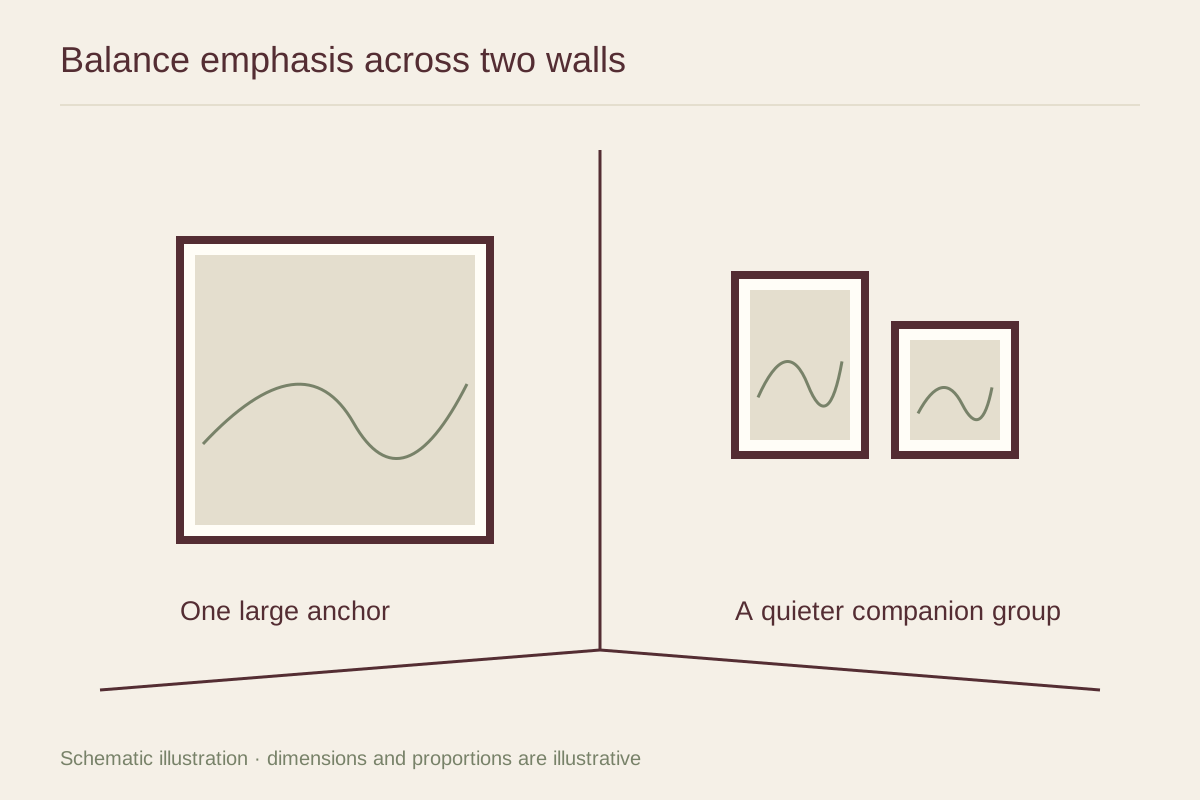
Decide which wall has the more important role. A large picture above the sofa may lead, while a small work near a chair offers a secondary moment. The second wall can remain quieter without feeling unfinished.
Compare visual weight
Dark areas, bright colors, dense detail, and heavy frames all contribute to presence. A small black-and-white photograph can balance a larger pale watercolor reproduction. Measure the objects for installation, but judge their relationship by looking at the complete images.
Try moving one strong piece before changing every frame. Often the issue is concentration: several dark objects on one wall and only pale surfaces on the other. A single shift can redistribute attention more effectively than adding more art.
Connect without duplicating
A repeated frame finish or one related color can link the walls. The connection should remain visible from the shared viewpoint; a tiny accent that disappears at distance may not do much work. You can also connect the displays through a similar amount of open wall around each group.
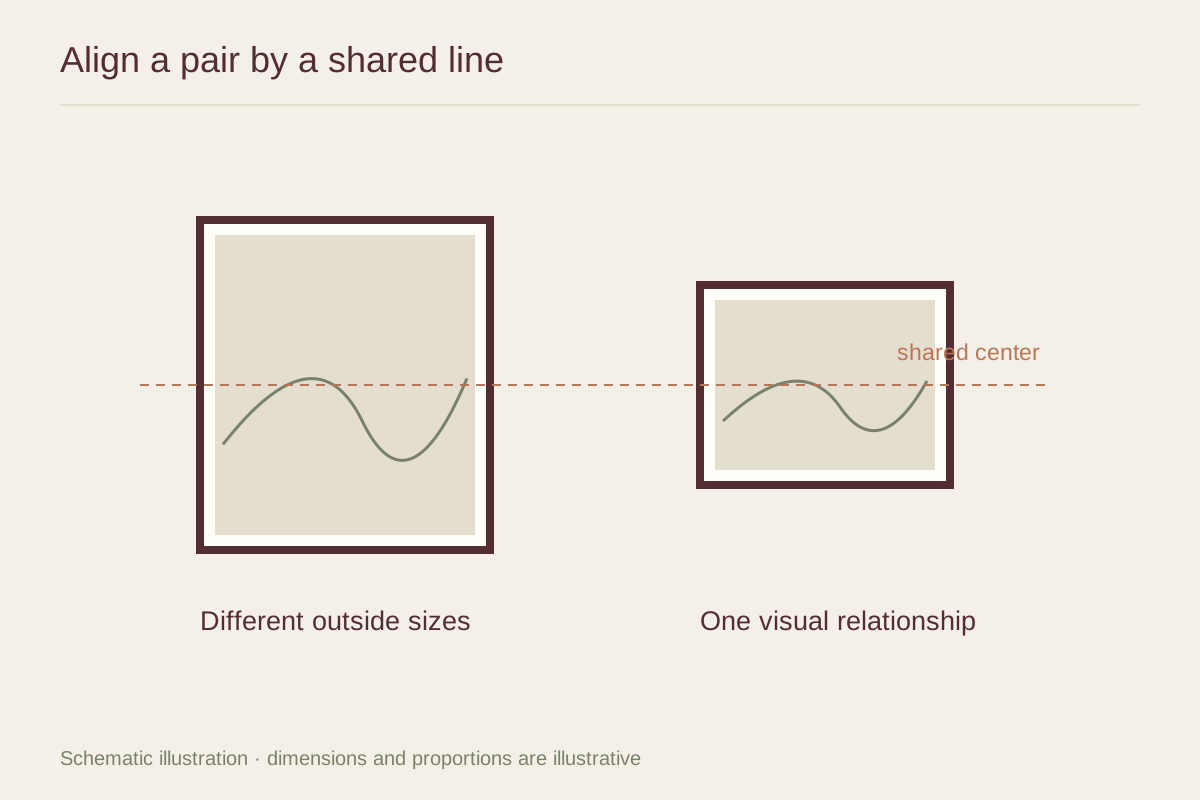
Avoid lining up frame tops across the room automatically. Furniture and architecture may place the two displays at different useful heights. A picture over a low chair and one above a tall sideboard can still belong together without sharing an exact horizontal line.
Check the room in motion
Walk between the two walls and sit in the other main seats. One balanced photograph does not guarantee a comfortable room. If the art feels crowded from several positions, remove a work and see whether the remaining pictures become easier to appreciate. Balance can come from less competing information rather than equal amounts on every wall.