Choose an anchor and a boundary
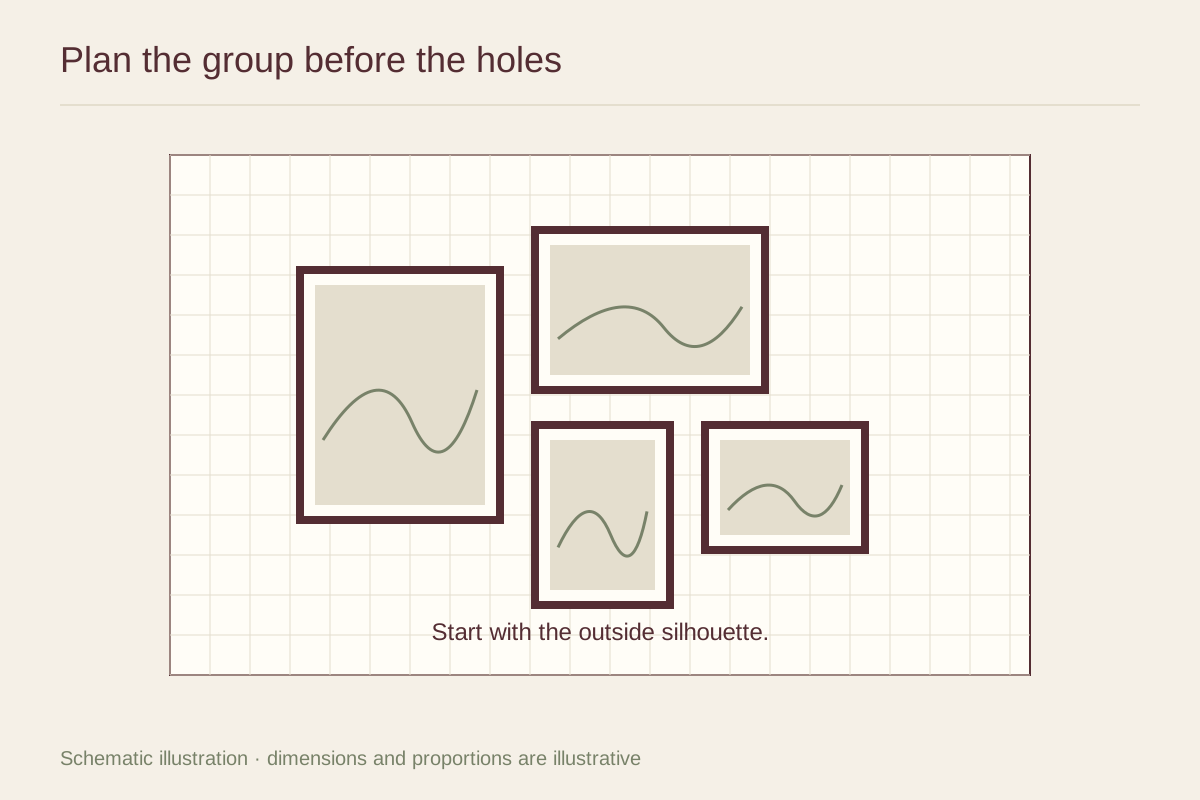
Select one work with enough presence to begin the group. It may be large, dark, vividly colored, or simply the image you most want to emphasize. Place it on a scaled sketch, then add two works that establish the group's approximate width and height.
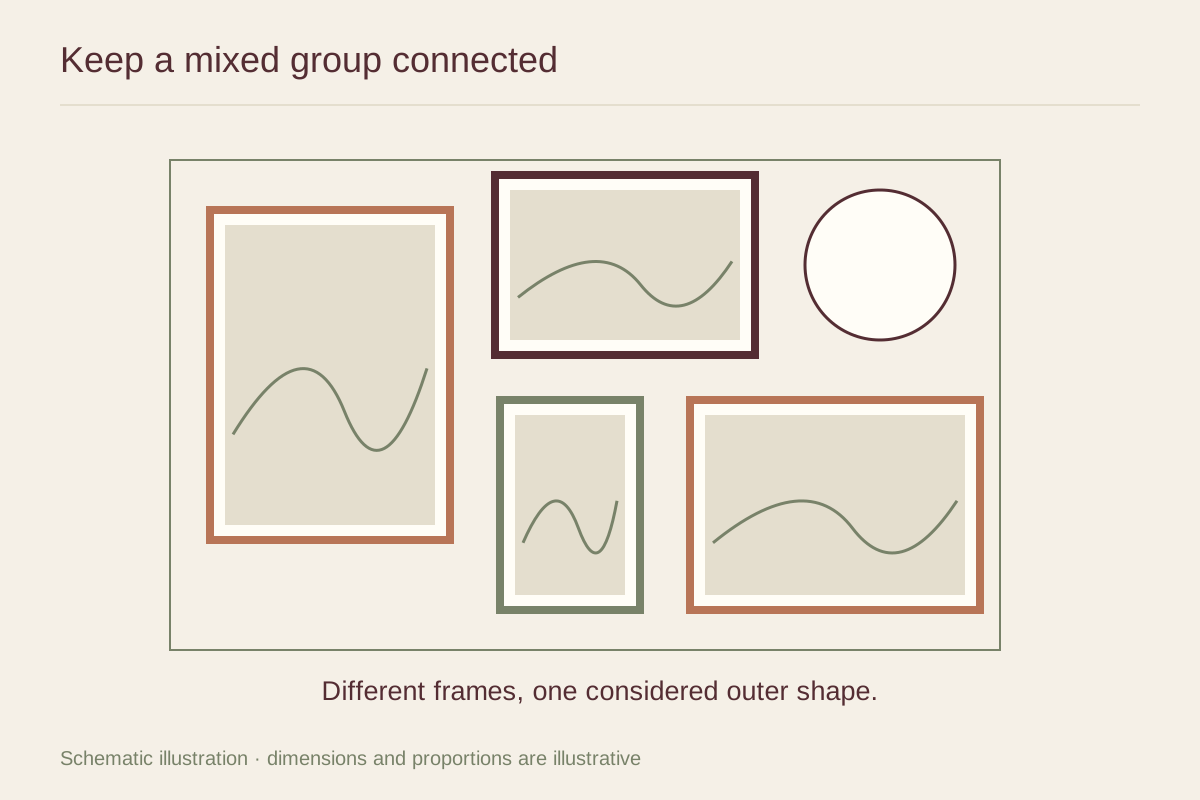
Decide how far the display should extend before filling its interior. Without a boundary, a loose group can grow toward every switch and corner. A soft rectangular or oval outline can help it feel complete while leaving individual frame edges varied.
Repeat lightly
Use a small number of frame qualities more than once: perhaps dark wood, pale wood, and black. The frames do not need to match exactly, but repetition helps the eye find a relationship. A single unusual frame can then feel like a deliberate exception.
Color and subject can provide other links. A small red detail repeated in two distant works can connect the group, while a mixture of drawings and photographs can be unified by similar paper tones. Avoid forcing every image into the same palette if that removes the character of the collection.
Keep gaps readable
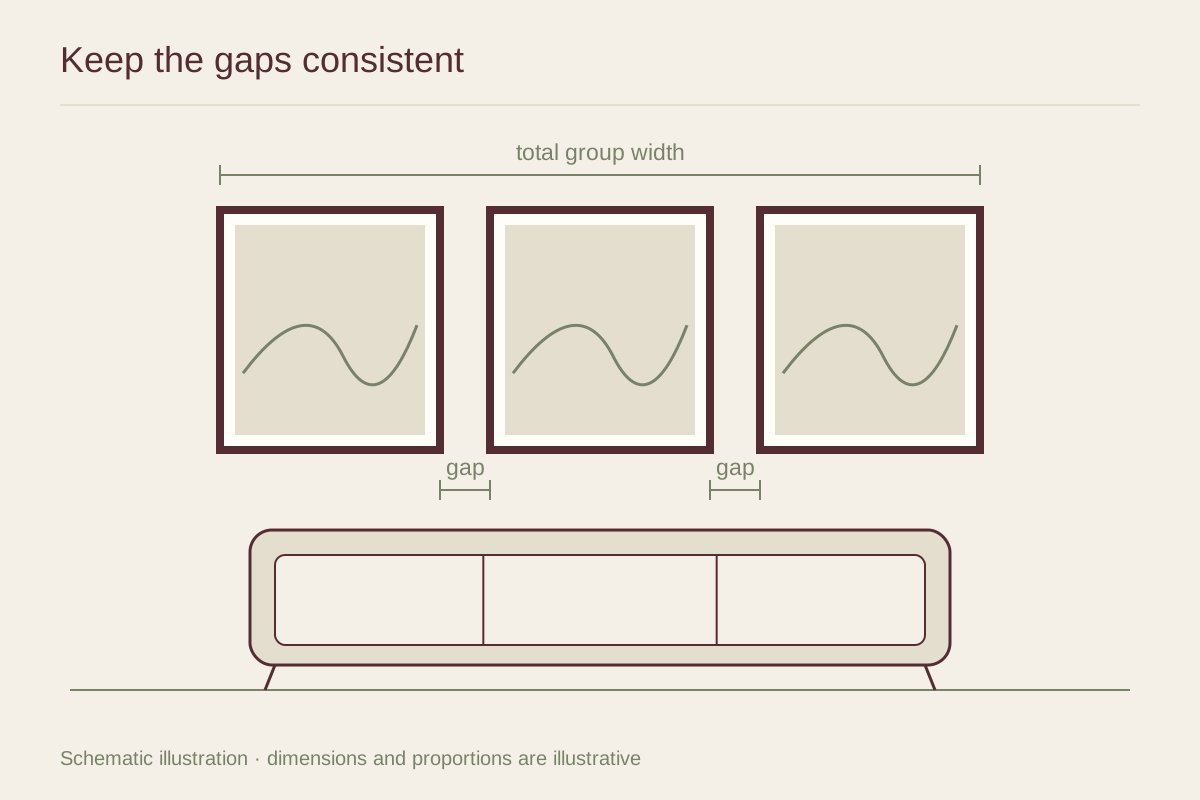
Begin with broadly consistent spaces and adjust where frame shapes demand it. Large empty holes inside the group can feel accidental, but filling every small pocket with another picture can become cluttered. Try moving two existing works before adding a new one.
Use full-size templates and inspect the group with furniture in place. A layout that looks lively on the floor may crowd a lamp or extend awkwardly beyond a sofa. The room is the final frame around the collection.
Let the wall stay editable
Photograph the chosen arrangement and keep frame measurements. When a new work arrives, compare a few changes on paper instead of automatically attaching it to the outer edge. Informal does not mean unplanned; it means the structure leaves room for different objects to retain their identities.