Start with the furniture group
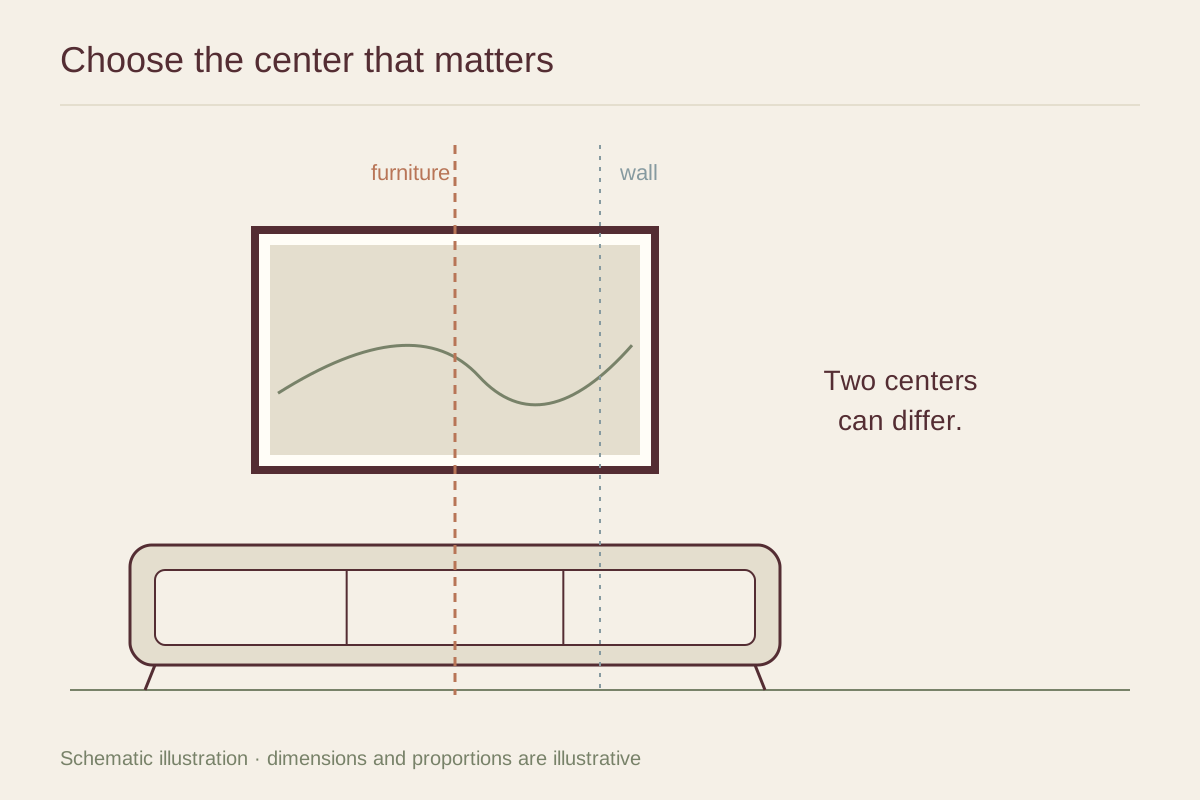
Above a sofa, bed, or sideboard, the artwork often reads as part of that furniture arrangement. Centering it on the furniture can feel settled even when the furniture itself is offset on the wall. Include side tables or lamps only if they visually belong to the group you want to emphasize.
A paper template makes the choice clear. Mark one center line for the furniture and one for the usable wall, then compare the same outline in both positions. Avoid adjusting the size at the same time, or you will make two decisions without knowing which improved the result.
Notice the architecture
A doorway, chimney breast, alcove, or pair of windows may define a smaller wall area that matters more than the full room width. A picture can relate to that architectural section, particularly when there is no substantial furniture below it.
Do not use a light switch or an existing nail as the main reason for the position. Those are practical constraints to account for, not necessarily the visual center of the display. If the best position is impossible, reconsider the frame size or another wall rather than pretending the obstacle is invisible.
Check the image's own balance
The center of the frame may not feel like the center of the composition. A figure, dark shape, or large empty area can pull attention to one side. Small adjustments may help, but judge the work as a whole instead of trying to calculate an exact visual center.
Look from the doorway and the seats, then leave the template in place for a while. If the furniture-centered position feels clearly connected and the wall-centered one looks detached, use the furniture. If the artwork serves the room's architecture or a long sightline, the wall may be the better reference. The goal is a relationship that can be seen, not symmetry for its own sake.
Work through an offset sofa example
Suppose a sofa sits left of the wall's center because a doorway needs clearance on the right. A picture centered on the whole wall may then appear to slide off the sofa. Start with the sofa's center, and assess whether the remaining wall space already has a purpose as circulation.
If a tall floor lamp sits beside the sofa, include it in a second test of the overall seating group. You may prefer a modest shift toward that lamp. The adjustment should respond to an actual visible relationship, not split the difference between two measurements simply to avoid choosing.