Find the area the picture belongs to
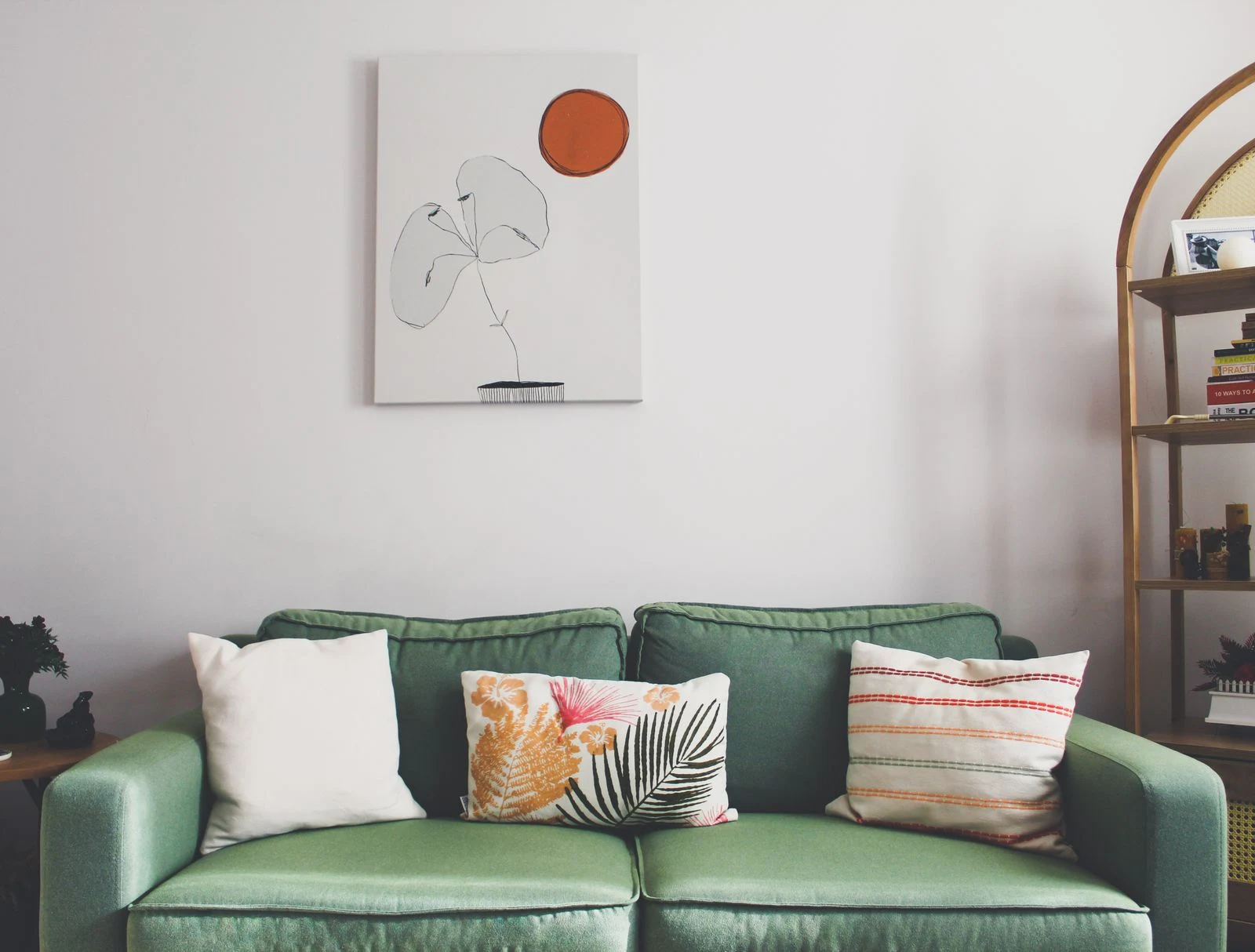
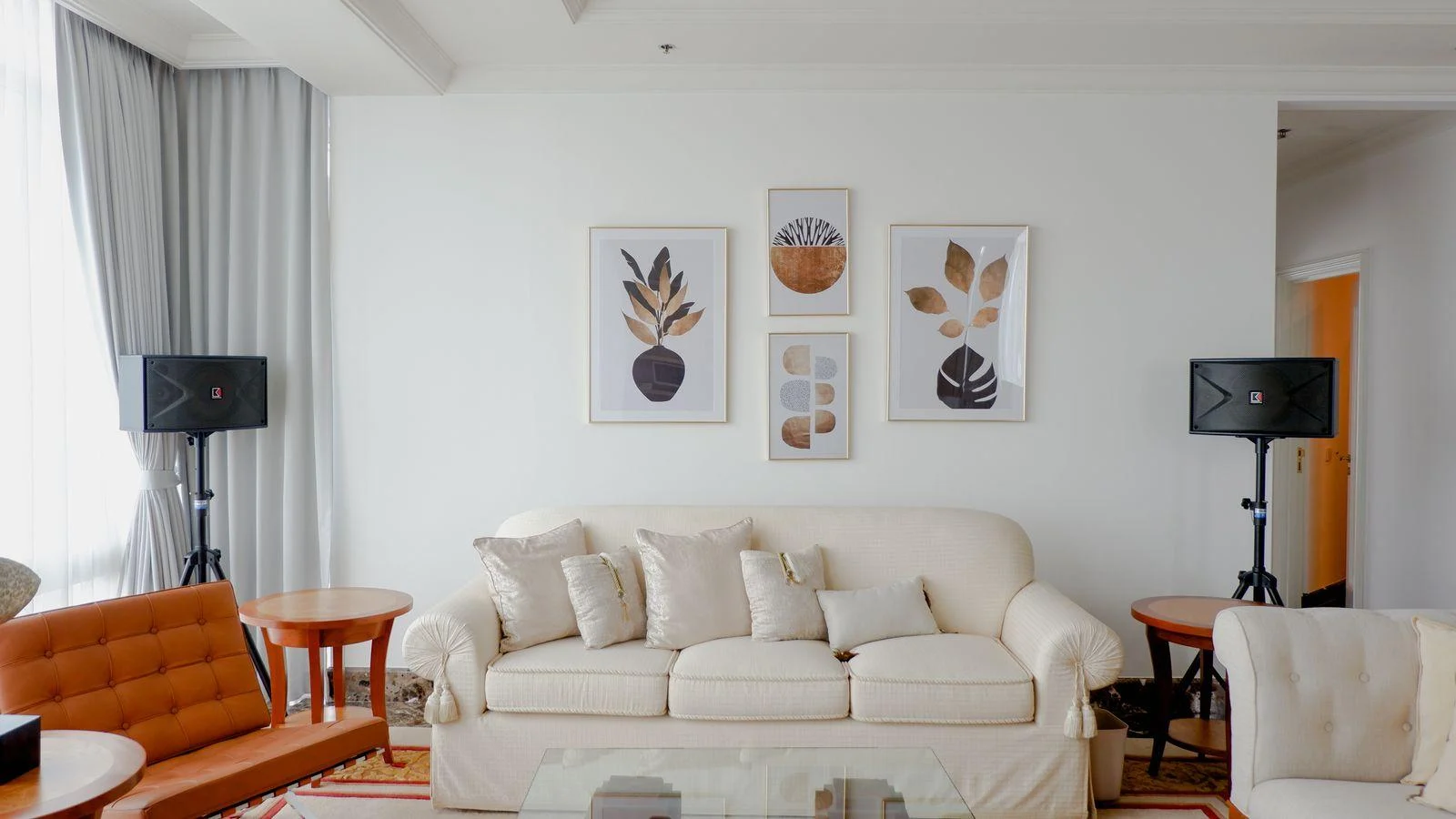
If a sofa or sideboard sits below the art, begin with that furniture grouping. The useful display area may be smaller than the full wall, particularly when a doorway or floor lamp occupies one end. Center a paper outline over the grouping and compare it with a wall-centered version.
Allow room at both ends of the frame. A print nearly as wide as its furniture can feel strong and deliberate, but it can also look top-heavy when the furniture is visually light. Compare shapes in the room rather than relying on a universal size ratio.
Follow the image's movement
Some horizontal pictures lead the eye gently from side to side. Others have one dense cluster at an edge or a strong diagonal that draws attention toward a neighboring object. Look at the image's balance before assuming that its geometric center will feel like its visual center.
A panorama with tiny details may be rewarding near a dining table where people can approach. Across a large living room, broad shapes or a clear horizon may remain more legible. Ask for a detail view at the intended print size if texture or fine marks are central to the image.
Leave alternatives open
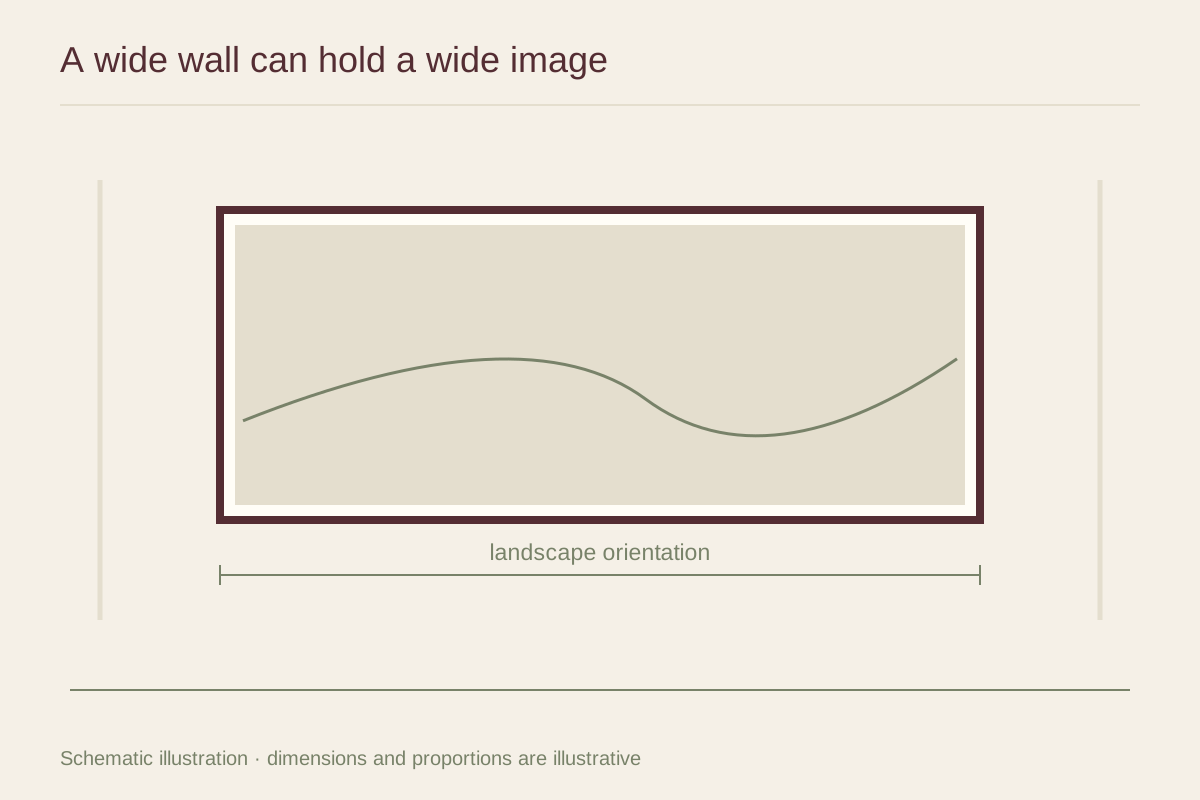
A wide wall can support a smaller landscape print with generous empty space. It can also hold a pair or an uneven group. Compare these possibilities with paper templates before buying, especially if the single print you like is available only at a modest size.
Check the finished weight and mounting requirements for a broad frame. Its span can make it awkward to handle even when it is not especially heavy. Plan a suitable installation and a clear carrying route, then choose the image because it holds your interest, not because its dimensions happen to fill the gap.