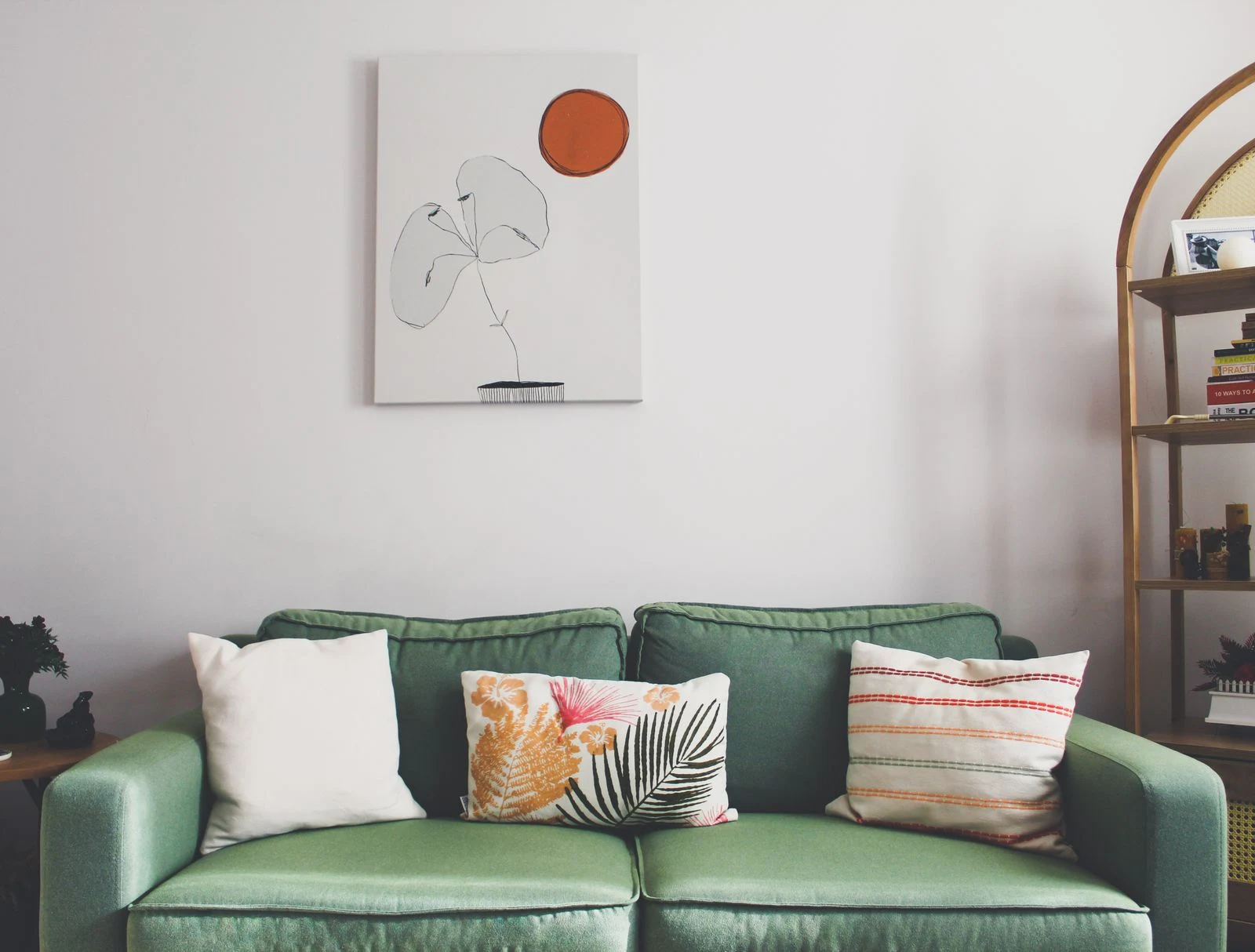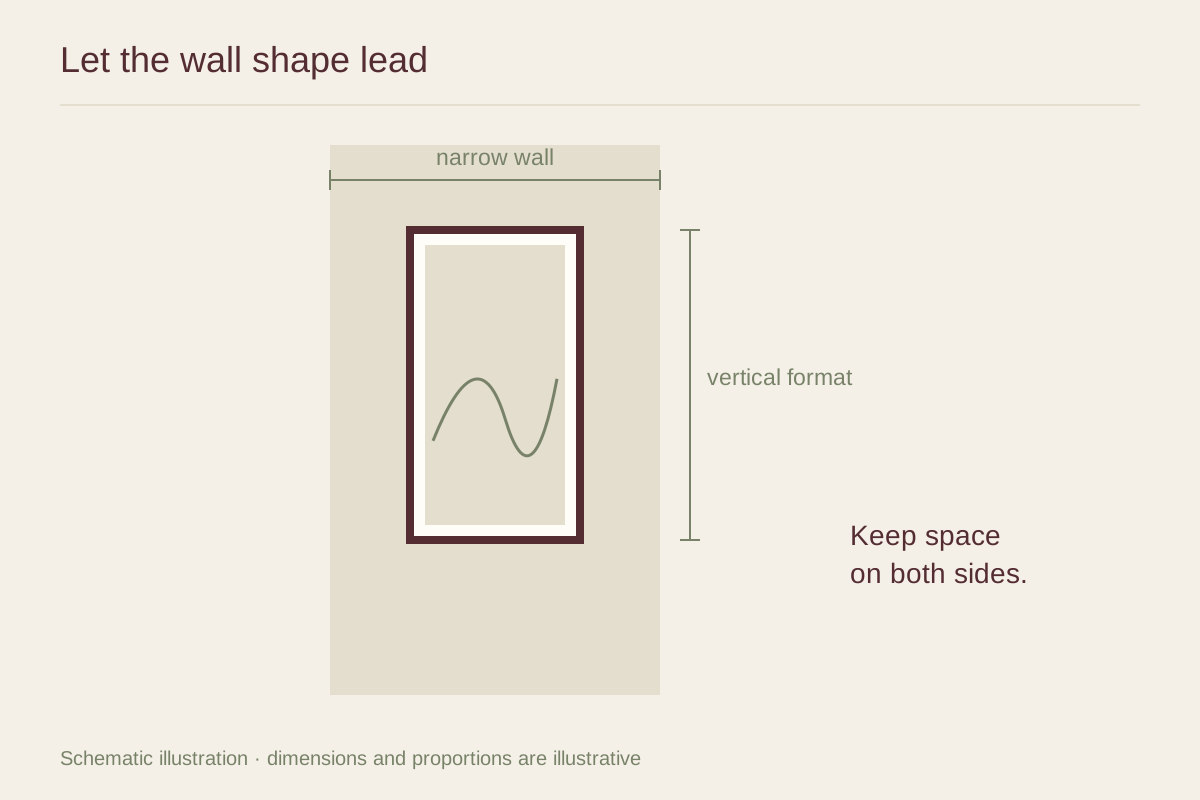
Use a full-size outline
Tape together sheets of plain paper to represent the outer frame, then position the outline on the wall with a surface-appropriate temporary method. Include the width of the frame and any mat. A large print shown without those additions can seem to fit a wall that the finished object will crowd.
Look from the main doorway and the seats used most often. The outline should have a relationship with the furniture below it, but it does not need to occupy a fixed percentage of the wall. A broad quiet image and a compact high-contrast image can have quite different visual weight at the same dimensions.
Choose an image that rewards the scale
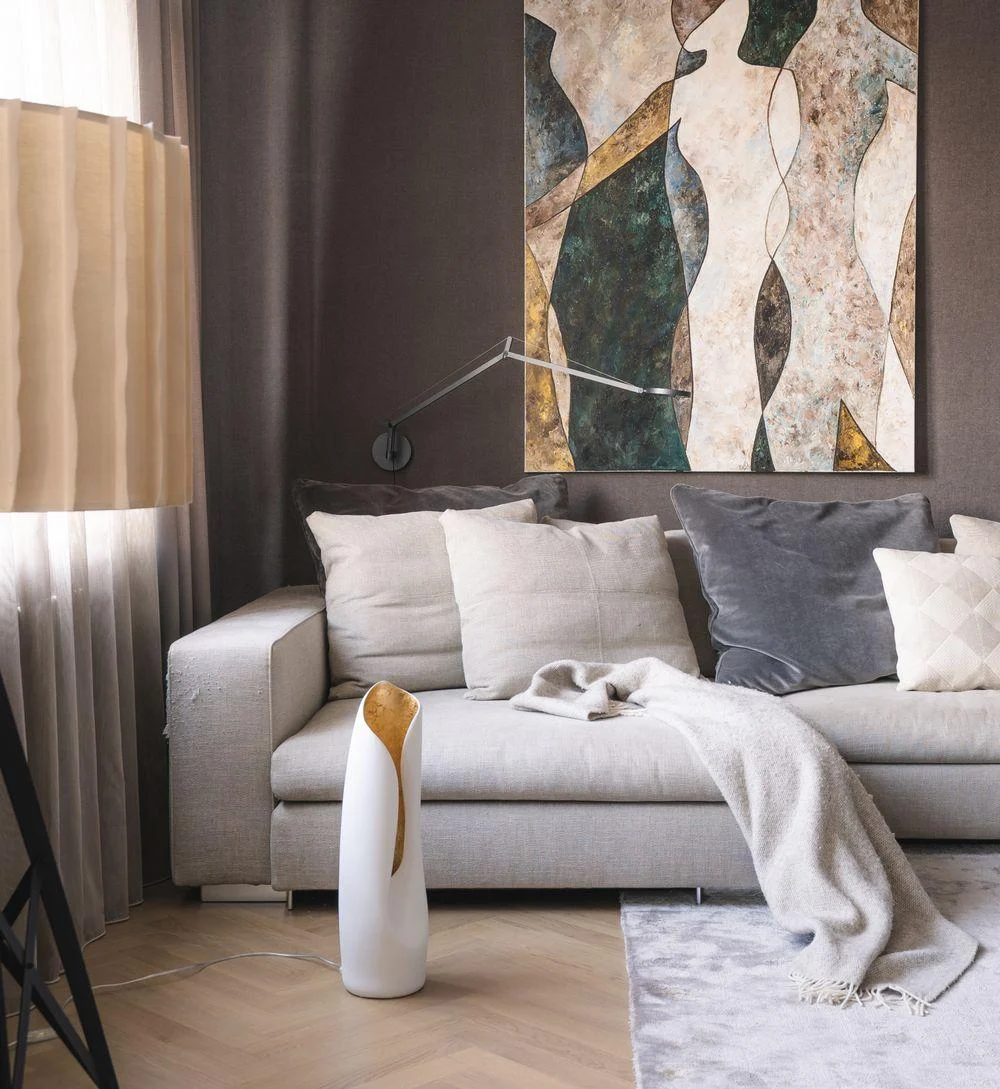
Large art is not simply a small image made bigger. Ask whether the details, texture, and composition remain convincing at the intended size. A close-up photograph of the print can help, and a full-size detail sample is useful when available. An intentionally soft image should still look intentionally soft.
Notice the room's other focal points. A fireplace, a dramatic window, and a large picture may all ask for attention. You can still use them together, but allow one to lead from the main view. A restrained palette can help a large work coexist with strong architecture.
Include the less visible costs
Request the finished weight, glazing material, hanging fittings, and delivery dimensions before ordering. Compare the route through doors and stairs with the packaged size. Installation may require help or a professional, particularly for heavy glazing or a difficult wall.
Include framing, delivery, installation, and future moving in the budget. If those costs make the preferred size impractical, try a slightly smaller work with more open wall around it. Choosing one large piece should simplify the room, not leave an object that cannot be safely displayed.
Compare the alternatives at equal scale
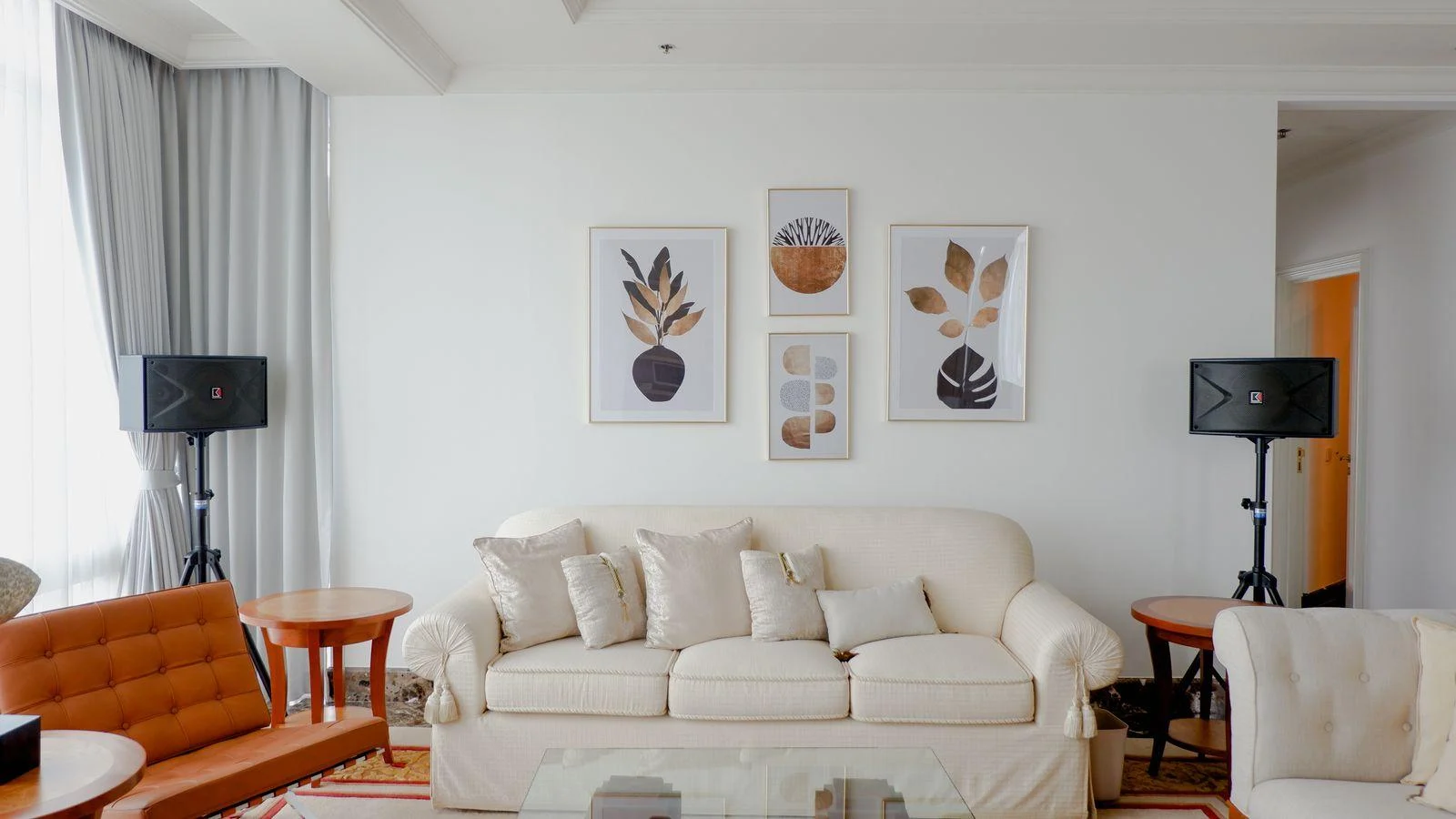
If you are choosing between one large picture and three smaller works, give both arrangements the same approximate outer width in your paper mockup. Then compare what changes: one uninterrupted image, or a rhythm of separate images and gaps. Otherwise, the wider option may seem more successful simply because it fits the furniture better.
Consider whether you want the flexibility of changing one picture at a time. A single large work creates a stronger commitment to one image; a group offers more opportunities for rotation. Neither requires a larger collection to be a complete choice.