Ask what belongs to the edition
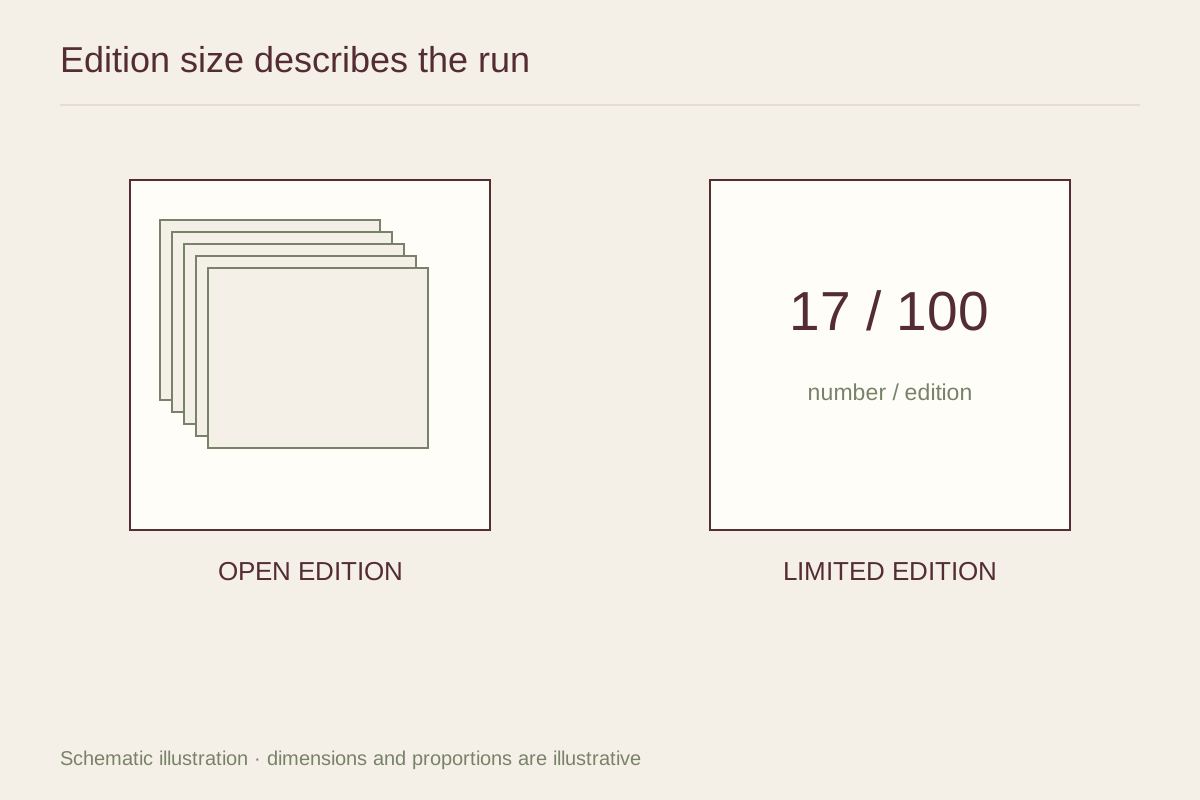
A listing may limit one size, colorway, material, or printing process while offering the same image in other forms. Ask whether the stated total applies to every version of the image or only to the particular product. The answer can be perfectly reasonable, but it should be clear before you buy.
Look for information about proofs and any additional editions. Artist's proofs, publisher's proofs, or other marked impressions may exist outside the main numbered sequence. Their presence is not automatically a concern; incomplete or contradictory descriptions are the reason to ask more questions.
Separate edition status from process
A limited edition can be a reproduction of an existing painting or an artwork conceived for a printmaking process. An open edition can be well printed on a material you enjoy. Neither label tells you, by itself, whether the work is a lithograph, screenprint, inkjet reproduction, or another type of print.
Read the medium carefully. Ask who made or authorized the print, who published it, and whether the description refers to the original artwork or the object being sold. A reproduction of a watercolor is not itself an original watercolor, even if the reproduction is signed and numbered.
The Museum of Modern Art's introduction to printmaking distinguishes processes such as woodcut, etching, lithography, and screenprint. Knowing a little about the stated process can make a listing easier to read, but you do not need to favor one process to make a thoughtful purchase.
Understand the number on the sheet
A fraction-like marking commonly identifies an impression within a declared edition, with the lower number indicating the edition size. Do not assume the upper number records the exact order in which that sheet was printed. If sequence or proof status matters to your purchase, ask the publisher for its documentation.
Check whether the signature is handwritten, printed as part of the image, stamped, or otherwise applied. A certificate can provide useful information, but it should agree with the listing and the marks on the sheet. Keep the invoice and product description as part of the record.
Compare the object you will display
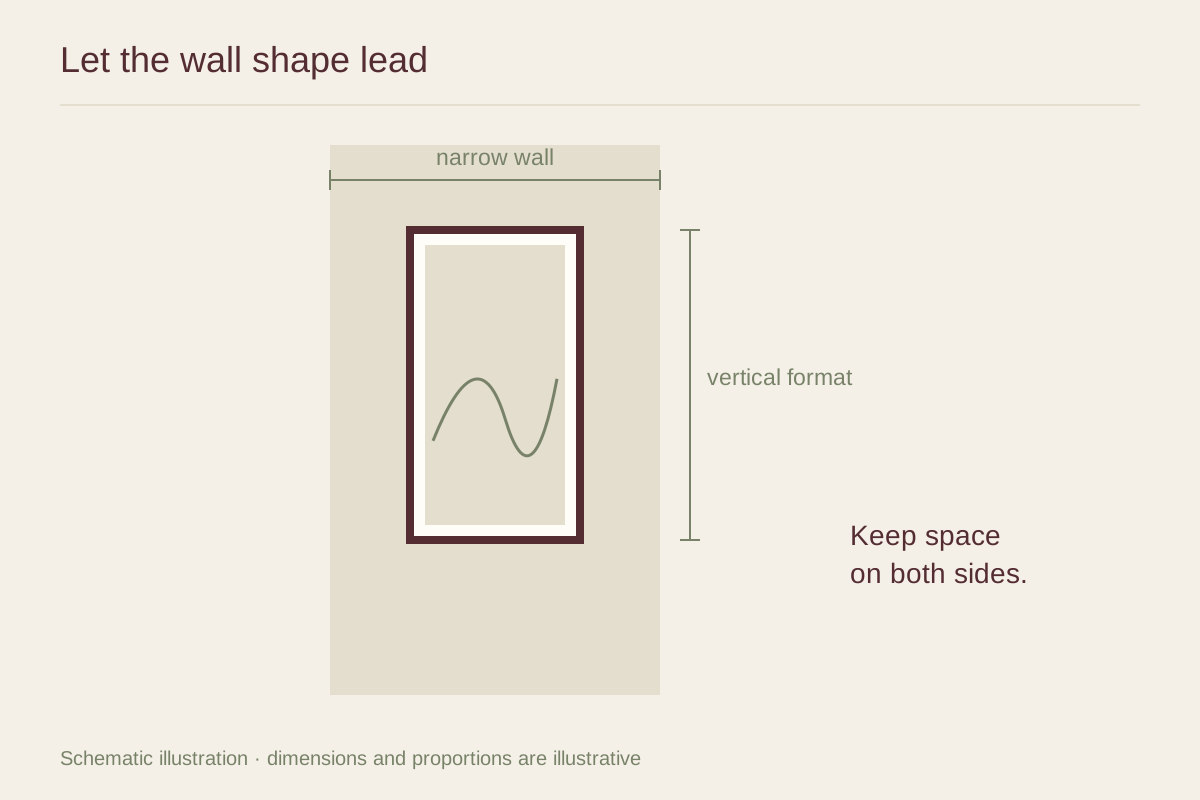
Place edition status to one side and compare image size, paper, printing quality, condition, border, and framing requirements. A more expensive edition that is too small for your chosen wall may be less satisfying than a well-made open edition at the scale you want.
Ask about availability and returns without assuming scarcity requires an immediate decision. A limited edition may sell out, but urgency is not a substitute for understanding the product. Give yourself time to check dimensions and the full framed cost.
Buy for a reason you can keep
If you are buying primarily to live with the image, choose the version whose appearance and total cost suit that purpose. Limited supply does not guarantee future demand, resale value, or an easy resale. A signature and low edition number do not remove those uncertainties.
An open edition can be a sensible choice for a frequently changed display or a room where you want a particular large size. A limited edition may appeal because of its specific process, paper, or relationship to the artist's work. Let those concrete qualities explain the purchase instead of treating the edition label as a ranking of taste.