Sit before making a mark
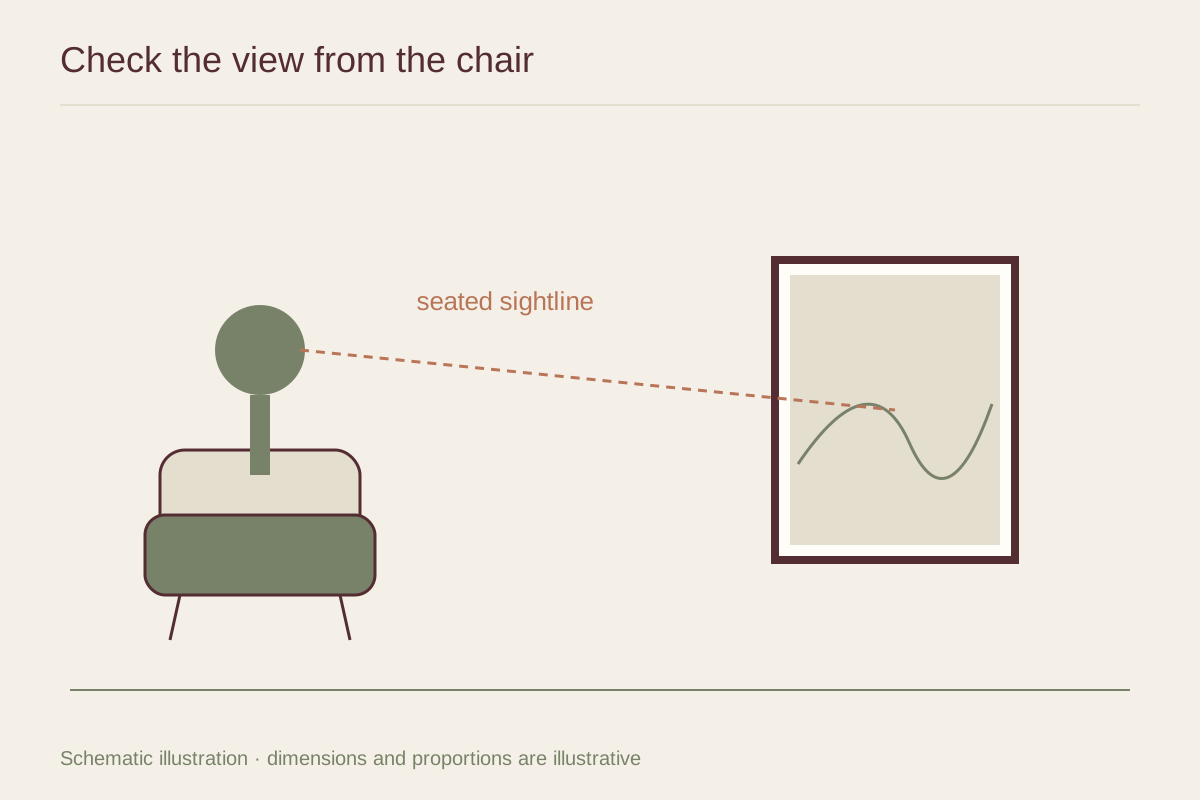
Place a paper outline on the wall and sit in the main viewing seat with your normal posture. Look toward it without deliberately tilting your head to accommodate the picture. Move the outline until the image feels comfortably within the room's ordinary view.
Check other seats too. A reading chair close to the wall and a sofa across the room create different sightlines. You may need a position that serves both reasonably rather than an exact height optimized for one person.
Keep the furniture connection
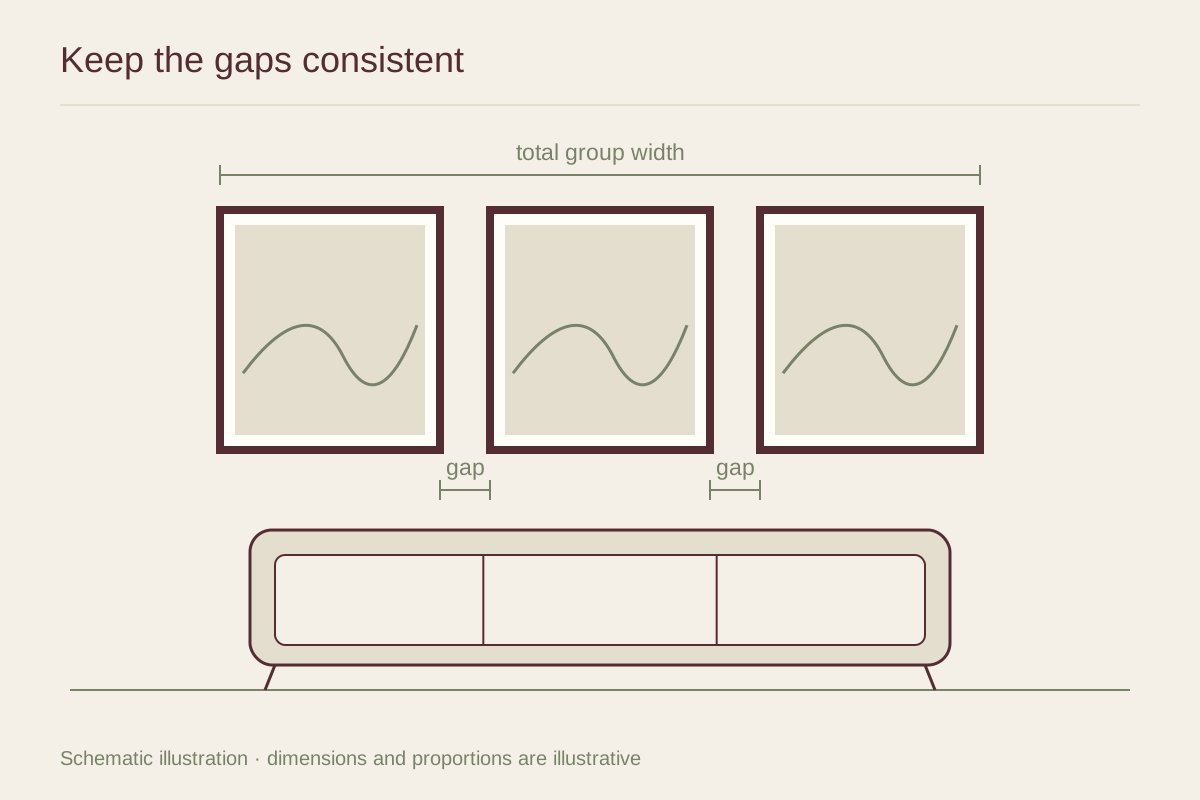
Above a sofa, the picture should remain clear of cushions and normal head movement while still relating to the furniture. Above a sideboard, consider lamps and objects that interrupt the view. The gap below the frame is part of the composition, but it also has to work physically.
A tall image can place its upper portion well above seated eye level without feeling awkward if its main content is easy to see. A small image inside a large mat may need a different position because the visible artwork occupies only a small part of the frame.
Check glare at the lower angle
Sit down with the lamps on and inspect reflections. Glazing that looks clear while standing may reflect a ceiling light directly from the sofa. A modest change in location can solve the problem more effectively than raising the art far above a comfortable view.
Photograph the template from seated height as a record, but trust the actual room. A camera can flatten depth and exaggerate the prominence of nearby objects. Once the position works, measure the frame's hanging hardware accurately and use fixings suited to the wall and full weight. Comfortable viewing and secure installation are separate parts of the same finished display.