Assess the fireplace as it is used
A decorative, unused fireplace and a working fireplace are different environments. Do not infer a safe distance from a room photograph or a general decorating rule. Follow the appliance's clearances and keep artwork away from heat and soot; valuable or sensitive works may belong on another wall.
The Library of Congress recommends placing framed paper objects away from working fireplaces and radiators. Glazing does not make paper immune to the surrounding conditions. A reproduction in a more suitable location is often a better display choice than risking an important original.
Check the mantel's depth and stability
A leaning frame needs enough support at its base and a suitable means of preventing sliding or tipping. The mantel's depth, surface, and edge shape matter. Do not rely on the frame being heavy, and do not place it where a passing hand, pet, or child could easily pull it down.
Keep the arrangement clear of candles and other heat sources. A candle placed in front of a frame for visual balance introduces a different risk and can leave soot. Use objects that do not expose the artwork to flame, liquid, or unstable contact.
Layer with the pictures still visible
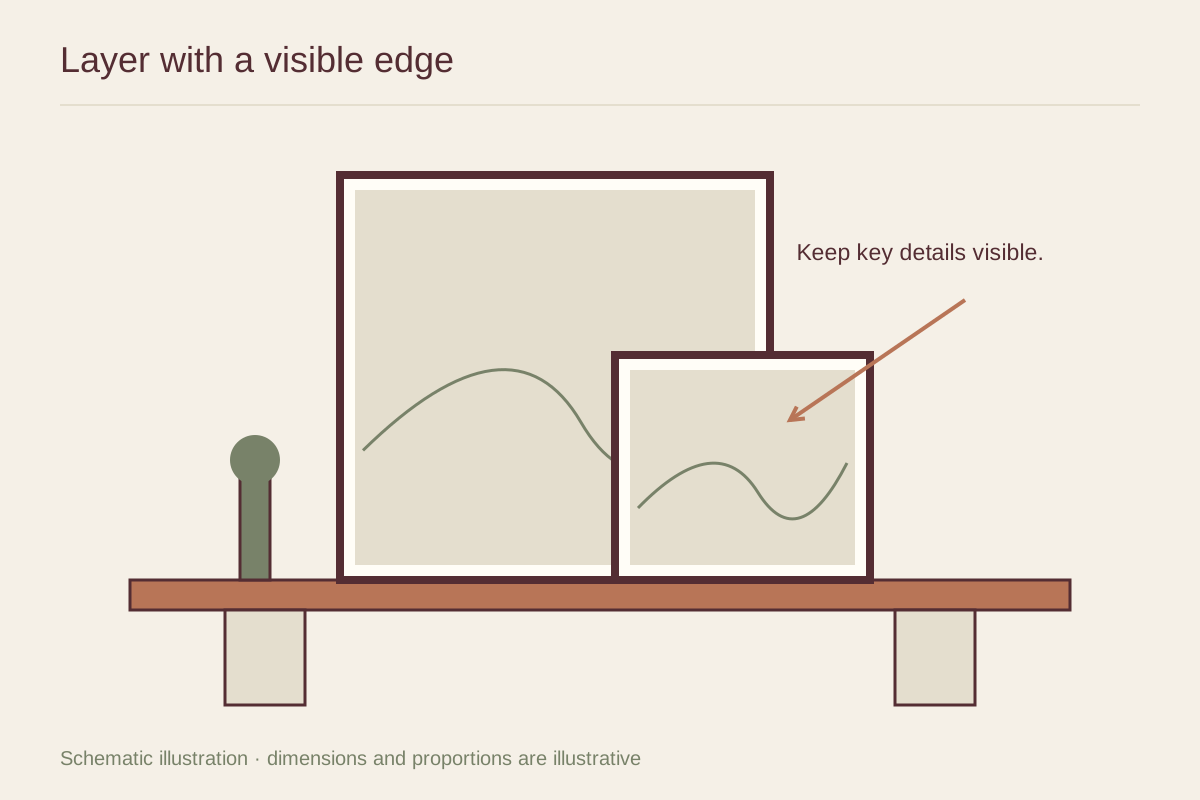
Choose a larger rear frame and a smaller front work with a clear difference in height. Let the overlap cover a border or quiet area rather than the main subject. If the front picture hides much of the rear one, the layer is becoming a stack rather than a display.
Balance the group with open space instead of adding an object to every gap. Look from the seats and from the entrance, since the mantel is often viewed from below or at an angle. If the arrangement cannot be made stable and suitable for the fireplace's use, hang the work elsewhere and leave the mantel for less vulnerable objects.