Choose the page and its purpose
Decide whether the print is mainly a keepsake or something the recipient will read while cooking. A keepsake may preserve stains, crossed-out words and uneven handwriting. A cooking reference needs the quantities and instructions to remain clear. One design can sometimes do both, but the priorities should be explicit.
Ask the owner of the recipe before sending a scan to a printing service. A family page may include an address, telephone number or private note on the reverse or in the margin. Check the whole image for details that do not belong in the gift.
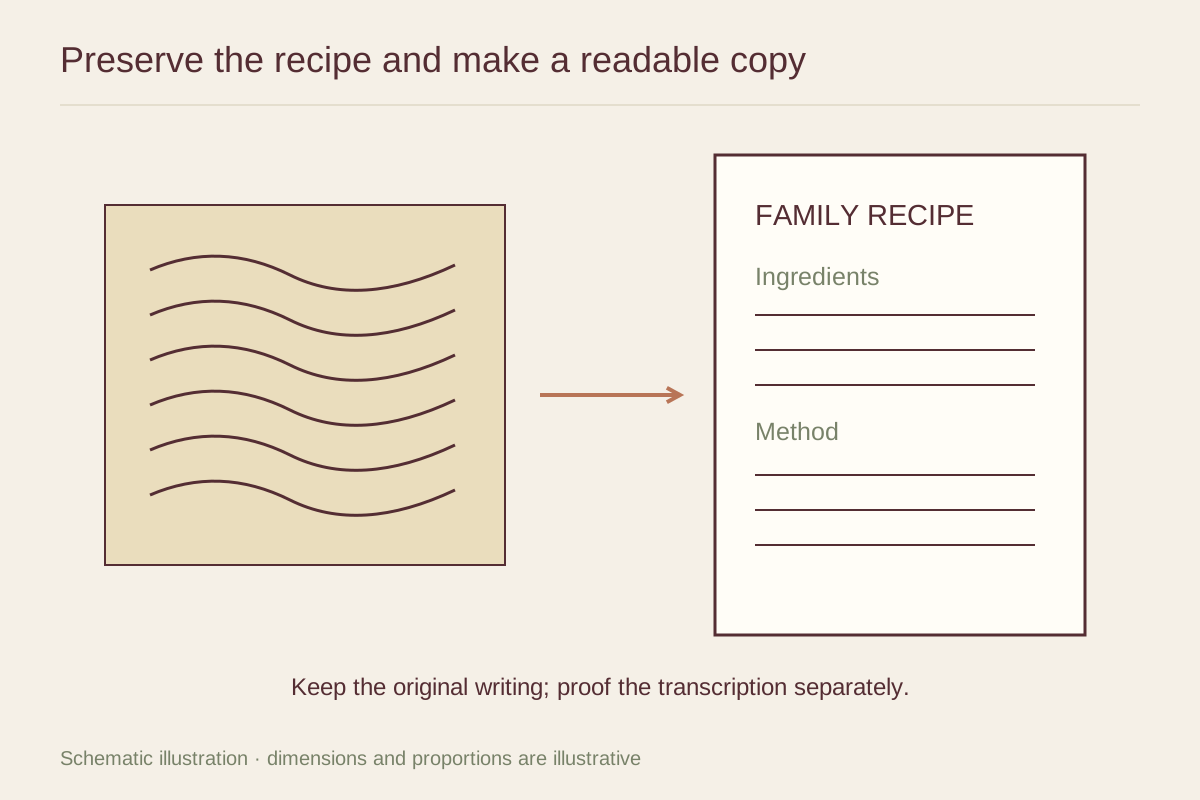
Make a clean copy without altering the original
If the paper is sturdy, a careful scan can capture it evenly. For fragile or damaged material, avoid forcing it flat under pressure; seek advice or use a gentle photographic setup that does not stress the page. Do not remove stains or marks from the original in an attempt to improve the print.
When photographing, use even light and keep the camera square to the page. Include all edges so the designer can choose the crop. Shadows from a phone or strong glare can make faint handwriting disappear. Check the file before putting the original away.
Separate transcription from decoration
If the handwriting is difficult to read, consider placing an accurate typed version beside or below a small facsimile. Compare the transcription line by line with the original, and ask someone who knows the recipe to review uncertain words. Do not silently guess a quantity because it fits the available space.
A family recipe can contain shorthand that was clear to its writer but not to another cook. If you add an explanation, distinguish it from the original wording. The print should not imply that a later clarification was written by the family member.
Test the smallest text
Print a draft at the final size on ordinary paper. Can the ingredients be read at the distance the picture will normally be viewed? A preview enlarged on a screen does not answer that question. Increase the type size or reduce decorative elements if the recipe is becoming a texture rather than readable text.
Keep enough contrast between the lettering and the background. A pale beige paper effect with fine gray writing may look nostalgic but be difficult to read. A generous margin can preserve the character of the page without reducing the recipe to a tiny central block.
Frame for the setting
If the gift will hang near a kitchen, choose a position away from direct steam, splashes and cooking grease. Framing does not make a paper print waterproof. A dining area or nearby hallway may be a better place for a sentimental copy.
Put the story of the recipe in a separate card: who made it, when it was served or why it matters to you. That keeps the printed page legible and allows the recipient to keep the personal explanation with the original family record.