Measure where the wall is usable
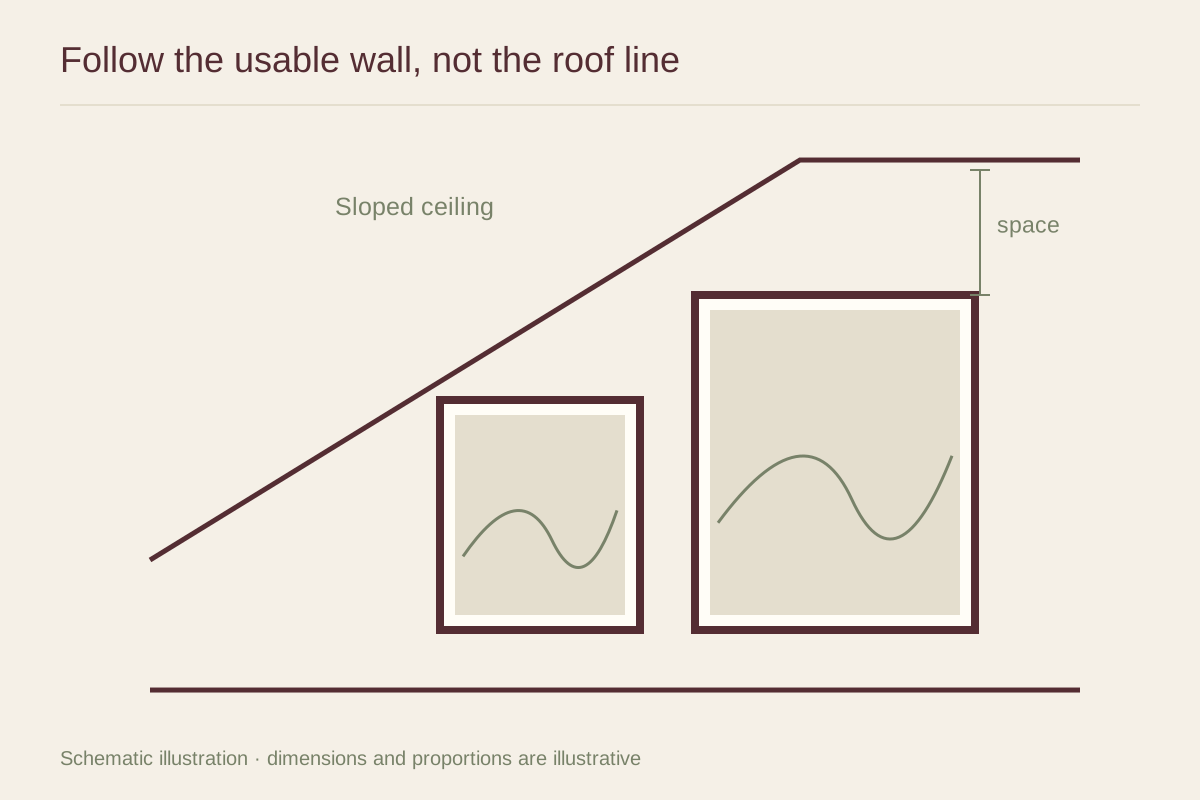
Sketch the slope, furniture, windows, and the places where people stand or sit. A tall wall section may be visually prominent but difficult to approach, while a lower section above a chair may offer a comfortable view. Do not treat the entire triangular area as a space that needs filling.
Use full-size frame templates to check clearance from the ceiling. Leave enough wall around the frame for it to feel distinct. A rectangle squeezed tightly beneath a diagonal can make the changing height more conspicuous rather than resolving it.
Choose a stable reference
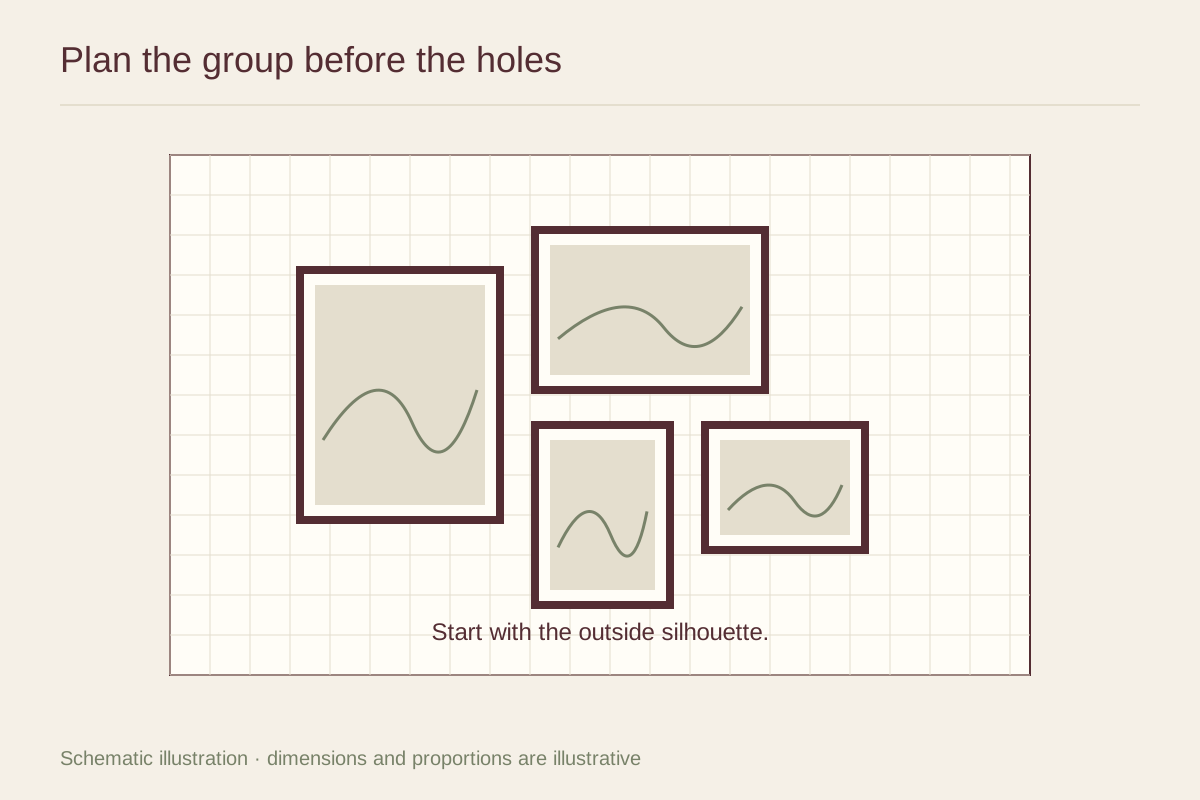
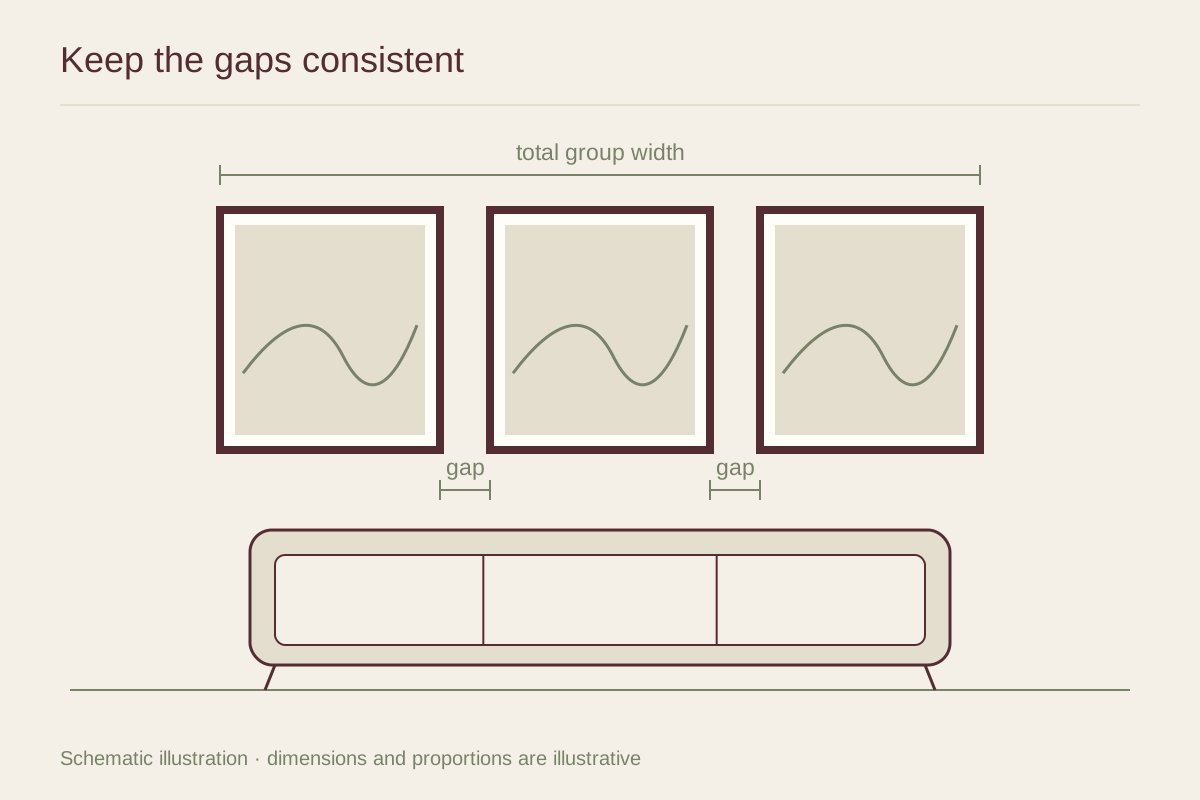
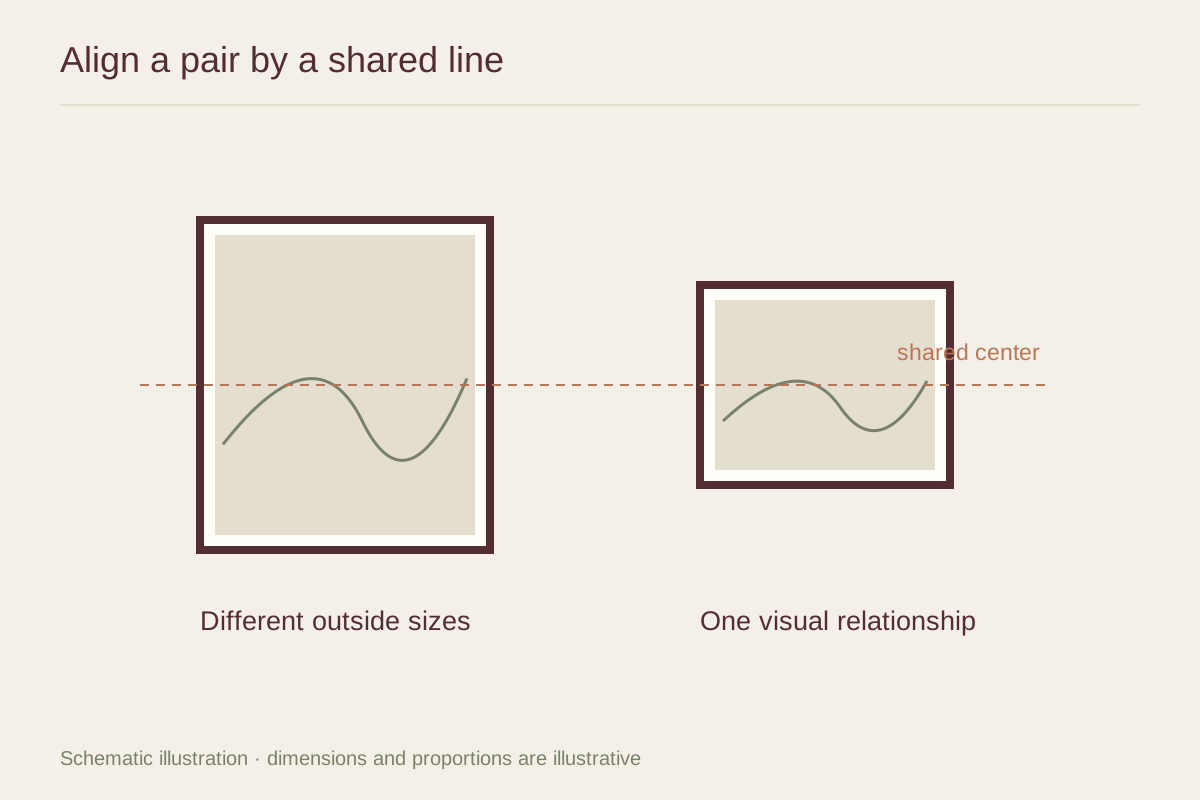
A horizontal row above a low cabinet can provide a calm counterpoint to the slope. A single vertical picture in the tallest area can emphasize height. A small cluster can work when its outer shape remains clear. Compare these options before assuming the frame tops must trace the ceiling line.
If you do follow the slope, make the relationship deliberate and check it from the entrance. A sequence that nearly follows the angle may look like uneven hanging. Paper templates allow you to see that distinction before making fixing decisions.
Respect the room's physical limits
Keep frames clear of head and shoulder movement in low areas. A deep frame beside a bed or desk can become an obstruction even if its front looks well placed. Check access for cleaning and safe installation, especially in a high stairwell or attic room.
Confirm the wall construction before selecting hardware. Sloped rooms may include surfaces and cavities that differ from the main walls elsewhere in the home. Follow mounting instructions for the actual substrate and frame weight. If no location offers a comfortable view and dependable fixing, use a freestanding display designed for that purpose elsewhere in the room rather than forcing art into the slope.