Choose what makes this drawing special
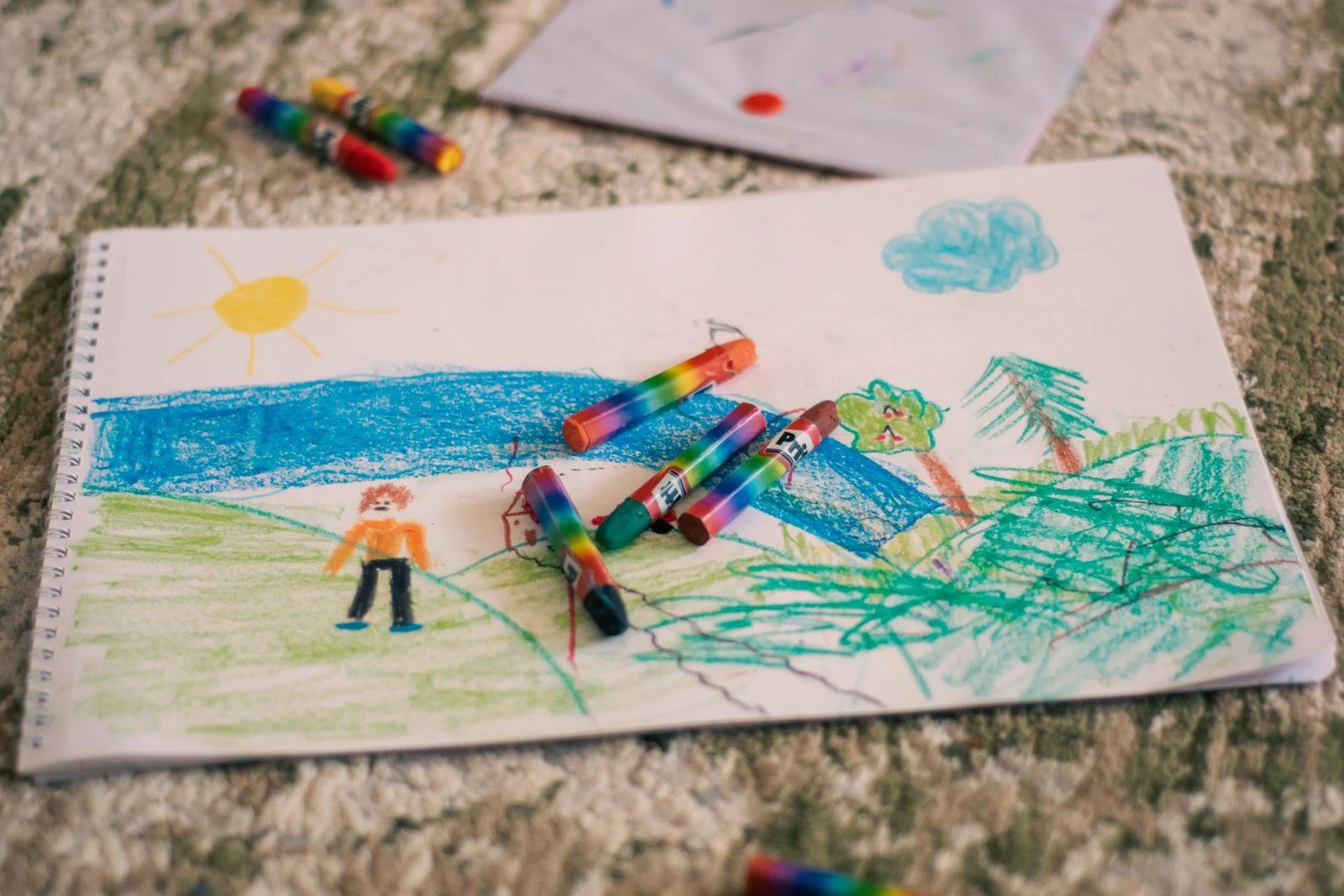
It might be the first recognizable family portrait, an invented animal or a page covered in repeated marks. You do not need to choose the most polished picture. Think about the story the drawing holds and whether that story will still be visible when it is enlarged or framed.
Ask the child, when appropriate, what should be included. A small mark that looks accidental to an adult may be an important part of the picture. Avoid removing a detail simply because it does not fit an adult idea of a finished composition.
Capture the whole page
Use a scan for a flat drawing that can be handled safely, or photograph it square-on in even light. Include the edges and check that pale pencil or crayon marks have not disappeared. Glossy paint, glitter and collage pieces may need a photographic approach because their surfaces are not flat.
Do not press a textured original under glass merely to obtain a neat copy. Raised pieces, loose glitter or delicate paint can be damaged. A straightforward photograph of the work may preserve its appearance more honestly than trying to flatten it into a scanner.
Keep the original separate from the production process. Send a copy of the file to a printing service, not the only physical drawing unless a specialist service specifically requires and can safely handle it.
Make small adjustments with a clear limit
A slight rotation, a crop outside the paper edge or a modest correction for uneven lighting can help the copy resemble the original. Strong sharpening, automatic background removal or heavy color changes can erase faint marks and alter the child’s choices.
Compare the edited file with the drawing in ordinary light. White paper may have a warm tone, and a pale yellow crayon may be intentionally subtle. The goal is not necessarily a perfectly white background with every line made equally dark.
Choose a scale that respects the marks
A small drawing can sometimes be enlarged successfully, but check the file and the intended print method first. Thick marker lines may remain convincing at a larger scale while faint pencil detail becomes soft. Ask for a sample or a close-up print preview if the enlargement is substantial.
A mat can give a small image presence without enlarging it. That may be a better choice when the charm lies in the original size or when the available file has limited detail. Keep any signature or date clear of the mat opening.
Add context without overwhelming the image
The child’s first name, age or the year can go on the back of the frame or in a separate note. If text is printed on the front, keep it secondary to the drawing and verify the details. Avoid publishing a full name or other personal information when it is not needed.
For a gift to a relative, a sentence explaining what the drawing shows can be enough. Let the child contribute the explanation where possible. Their description may be more memorable than a polished adult caption.
Keep a useful digital record
Save the original capture and the final print file under clear names. Record the print dimensions and any changes made to the image. This makes it easier to create another family copy later without repeatedly editing a compressed preview.
Store the physical original according to its materials and condition. The framed copy can be enjoyed in the room while the irreplaceable drawing stays protected from daily handling, sunlight and accidental splashes.