Find out what signed means
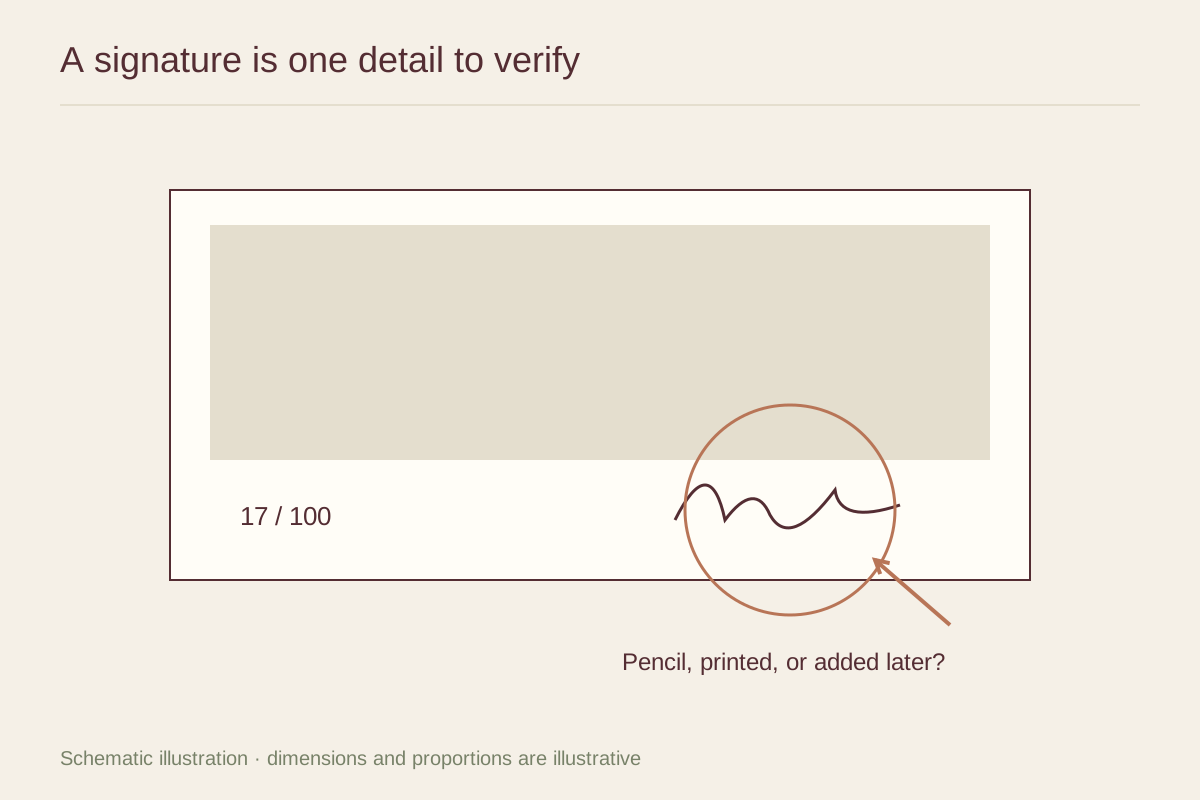
Ask whether the signature was applied by hand to the individual sheet or reproduced as part of the image. A printed signature can be entirely appropriate on a reproduction when the listing describes it clearly. The problem is ambiguity, not the presence of one method or the other.
Check where the signature appears and whether framing will cover it. A narrow margin may need a particular mat opening or a float mount to remain visible. Do not trim the sheet or alter a signature area simply to fit a frame without understanding what you are changing.
Read the accompanying record
Keep the invoice, title, artist attribution, dimensions, medium, and edition information together. If a certificate is supplied, compare it with the object and listing. A certificate with vague wording or no identifiable issuer is less useful than a clear record from a seller or publisher who can answer questions.
Condition still matters. Ask about creases, discoloration, mounting, repairs, and any marks on the reverse when buying an older print. A signature does not make those details irrelevant. Photographs of the actual sheet are more informative than a stock image of the edition.
Decide what the signature means to you
You may enjoy knowing that an artist handled or approved a particular impression. That is a valid personal reason to prefer a signed version, provided the claim is supported. You may also prefer an unsigned version because it offers the image and size you want within your budget.
Avoid assuming that signed means investment. Price and resale depend on many factors, and a mark on a sheet does not guarantee a future buyer. If the purchase carries substantial financial importance, seek independent specialist advice rather than relying on the seller's promotional language. For a home display, start with the artwork you want to see every day.