Distinguish a dark field from dark marks
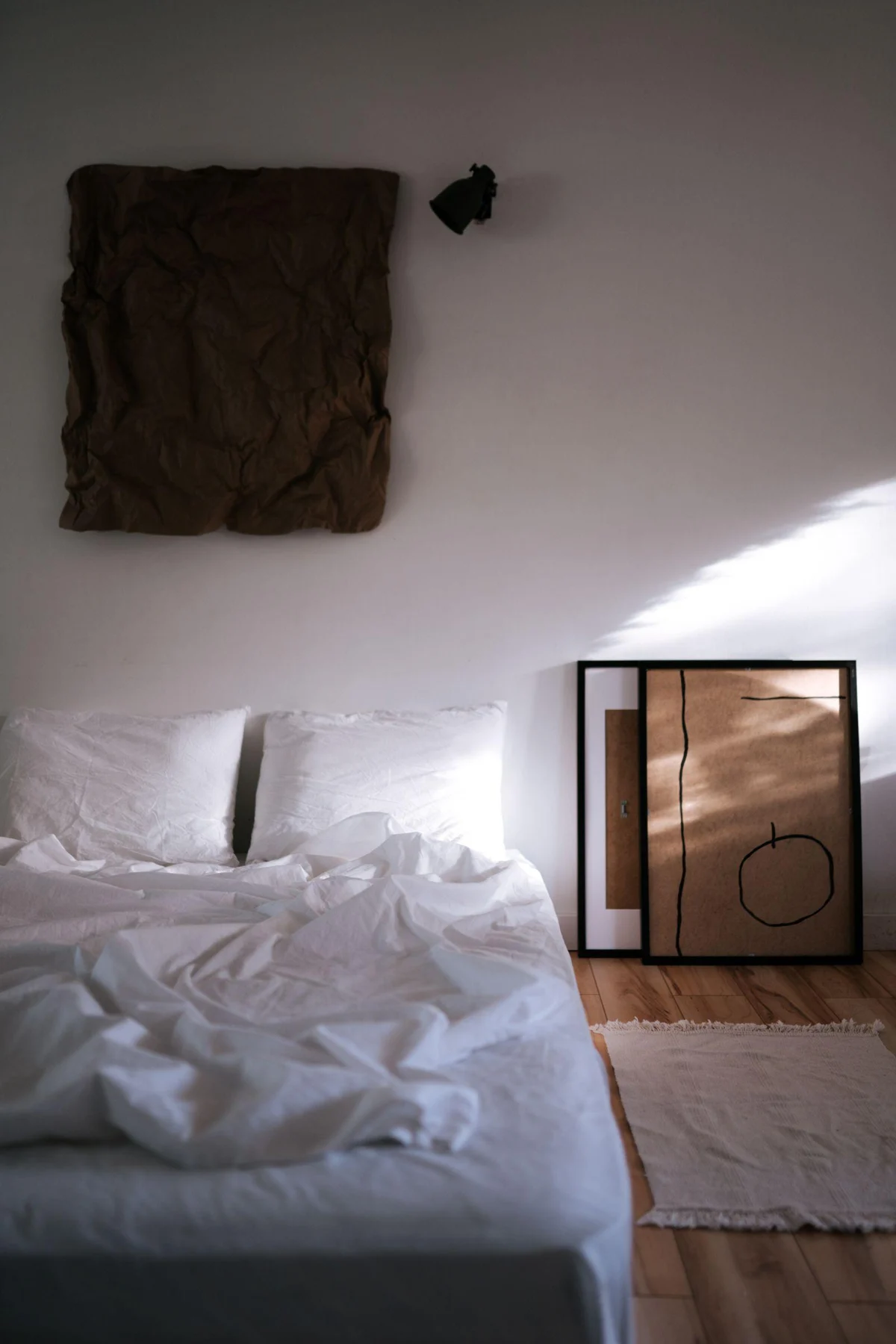
A fine ink drawing on white paper may feel light even though all its marks are black. A photograph with deep shadows can feel much heavier at the same size. Look at the image from across the room and notice how much of it merges into one dark shape.
A mat can soften the transition between that shape and a pale wall. A narrow black frame repeats the image's darkest note; a wood frame may warm the edge. Test the whole package because an extra-wide black frame can substantially increase the visual weight.
Find a useful position
Place a dark paper rectangle where the picture might hang. It will not reproduce the artwork, but it reveals whether a strong dark mass feels balanced above the furniture. Check the view from the doorway, particularly if the rest of the room is very pale.
A small dark work can balance a larger light object elsewhere in the room without being its mirror image. Avoid assuming that visual balance requires two equally sized pictures. A dark bookcase, window opening, or television may already provide a counterweight.
Protect the detail from glare
Reflections are often conspicuous over dark image areas. Examine the intended wall under both window light and lamps. If a bright reflection hides the picture from the main seat, consider another position or ask a framer to demonstrate glazing options with a dark sample behind them.
Do not buy the artwork only as a source of contrast. Dark images can contain subtle transitions that reward a closer look, and those qualities are easily lost in a small online preview. Confirm that the actual print preserves the details you enjoy, then let it stand confidently within the lighter room.