Inspect the structure without dismantling it
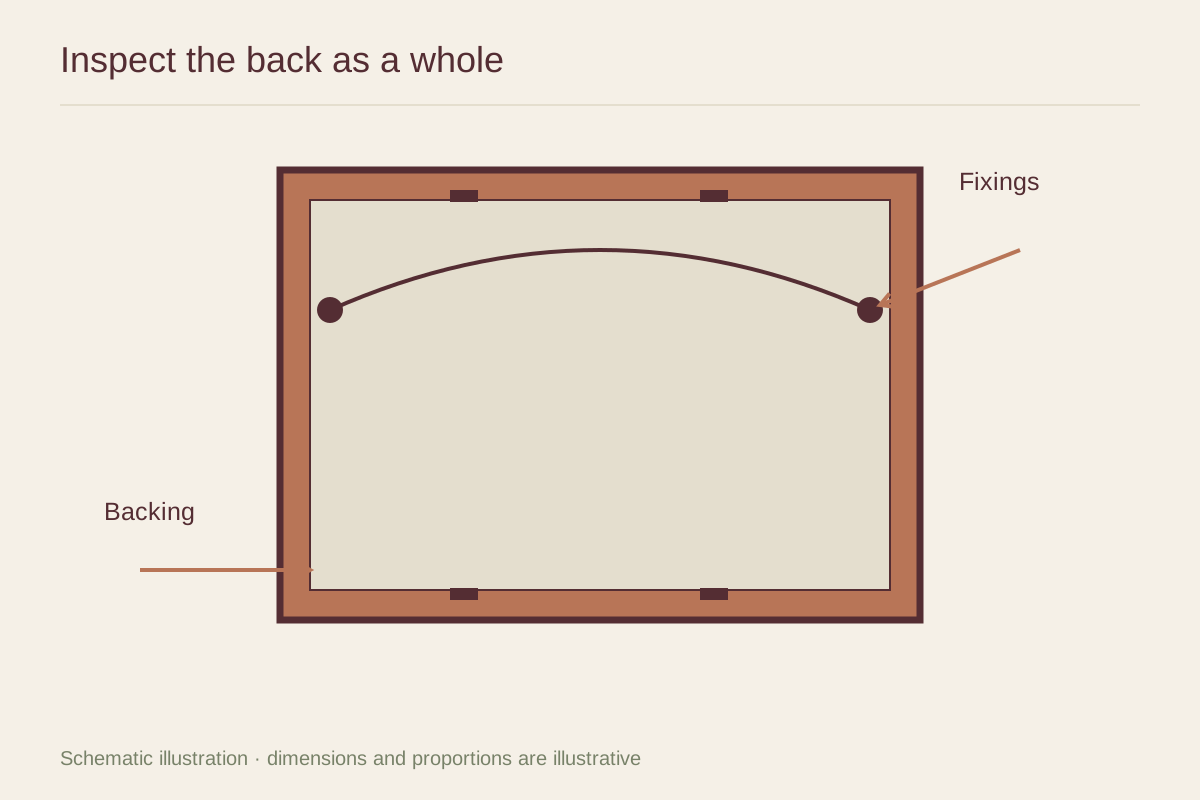
Look for separated corner joints, bent retaining tabs, loose screws, or a backing that no longer sits securely. Check the glazing from the front for chips or cracks. If anything shifts when the frame is gently repositioned, stop and have it assessed rather than hanging it to see whether it settles.
An older or valuable framed work should not be opened merely for a routine check. A torn dust cover can be noted and shown to a framer. Do not remove original labels or tape in search of a cleaner-looking back; those details may be useful records of the object's history or past treatment.
Identify the hanging arrangement
Some frames use wire, some use paired rings, and others use a rail or cleat. Follow the intended system. A ring that appears on the back may be a point for direct attachment rather than for improvised wire. Confirm the orientation and the manufacturer's instructions if the arrangement is unfamiliar.
Check the total finished weight and choose wall fasteners for both that load and the wall construction. A rating on one hook does not automatically describe a complete installation. Heavy, large, or awkward frames are good candidates for professional installation, especially above furniture where people sit.
Check how it meets the wall
A projecting easel stand, loose cord, or mismatched spacer can keep a frame from sitting as intended. Do not force the frame flat against the wall if a component is in the way. Ask whether the frame is designed for wall use and whether the stand can be removed according to its instructions.
Once installed, make sure the intended attachments are fully engaged and the frame is stable. Keep its weight and hardware details with the purchase information. The rear inspection is not a substitute for a sound wall attachment, but it helps you discover problems before the picture is overhead and difficult to reach.