Choose the image's lasting structure
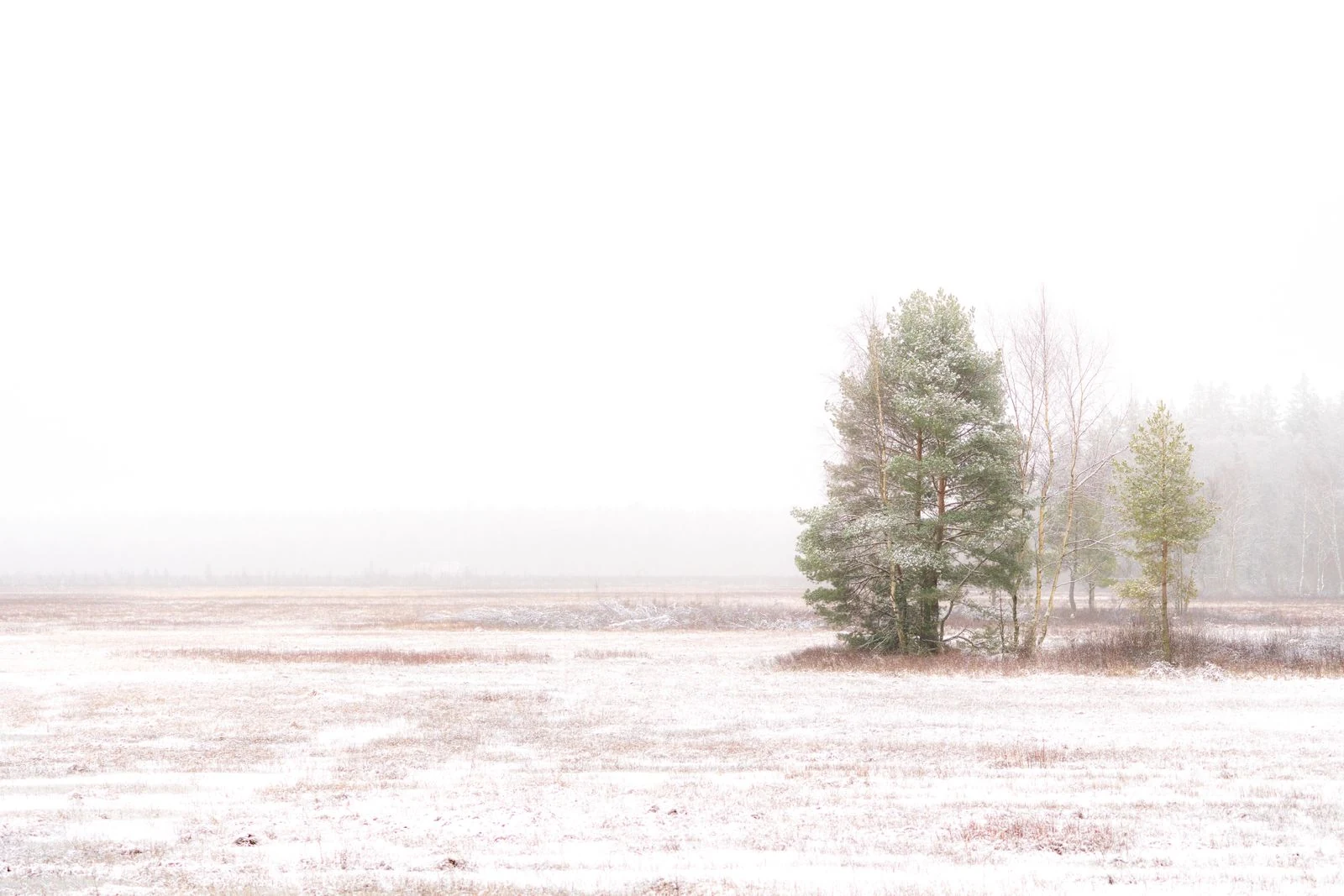
Look for the lines beneath the snow: a dark hedge, a roof shape, a river, or a low horizon. Those elements give the image a composition that remains interesting beyond winter. A nearly white scene may be quiet, but it still needs enough variation to hold attention at the intended size.
Consider whether people, buildings, or weather create a particular story. A village under fresh snow differs from a close view of a single branch. The more specific story may be exactly what you want, but it will have a stronger emotional presence than a broad pale landscape.
Check the whites in the actual print. Snow can contain cool blue, soft gray, cream, or pink light. A bright white mat may sharpen the image, while a warmer one can alter how those subtle tones appear. Compare samples before assuming that any white border will blend.
Let the room change around it
Use a frame that relates to permanent room materials rather than seasonal decorations. A restrained dark frame can echo bare branches; a pale wood can keep the image light. The same picture can sit beside summer flowers or heavier winter textiles without requiring a complete rearrangement.
Avoid surrounding the print with repeated snow motifs if you want a year-round display. A plain lamp, books, and ordinary furniture allow the image to remain a landscape rather than a holiday vignette. One cool tone elsewhere in the room may be enough to connect it.
Revisit the placement under different seasonal light. A wall that is shaded in winter can receive direct sun in summer, and a pale print may catch reflections differently as the room brightens. The scene can stay visually relevant all year while its physical location still needs thoughtful care.