Use the hallway's viewing distance
In a narrow passage, pictures are often seen at an angle and from close range. A small, detailed sketch can work well if there is a safe place to pause. In a long hallway viewed from one end, a stronger outline or larger drawing may register more clearly than fine pencil marks.
Check the wall's usable width after doors, switches, and furniture are considered. A deep frame can project into the route even when its front dimensions seem modest. Use a side-view template as well as a flat paper outline when the corridor is tight.
Choose a rhythm for several drawings
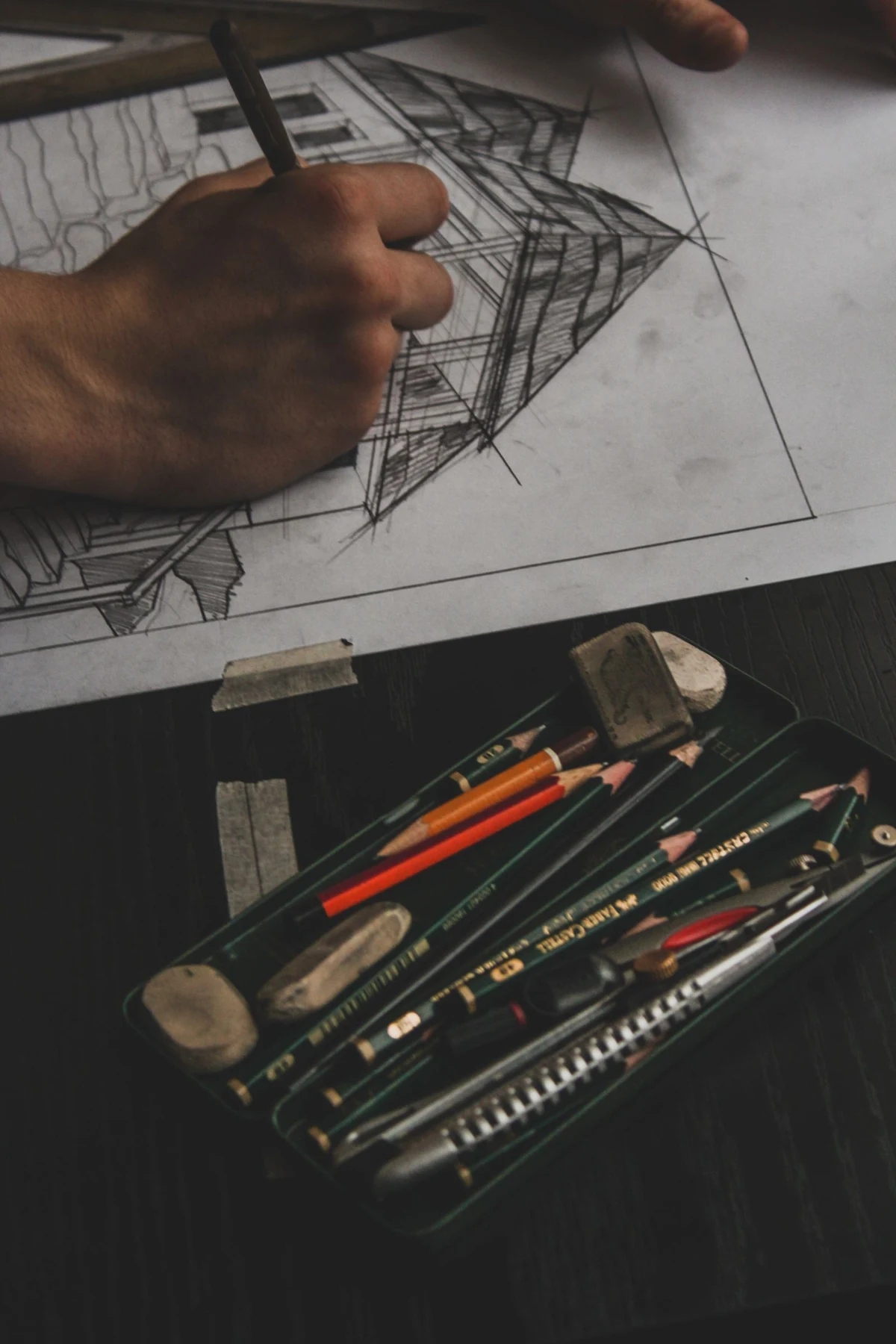
A row of related building studies can establish a steady sequence. Varying the buildings while keeping a similar paper tone offers interest without making every frame a separate event. If one sketch is much darker, position it intentionally as an anchor rather than letting it interrupt the row by accident.
Compare the depicted building scale, not just the frame sizes. A tiny facade in a wide margin and a close-up doorway may have very different visual weights. Mats can help align the outside objects, but they cannot make those internal compositions identical.
Keep the linework clear
Choose a mat that does not overwhelm faint marks. A very bright white may make warm drawing paper look dull, while a strongly colored mat can distract from delicate shading. Test actual samples under the hallway's lighting, which may differ substantially from a bright living room.
Hang the frames securely and leave them clear of door swings and shoulders. A simple profile can keep attention on the sketches and reduce the visual thickness of a row. If the hallway has several competing features, one larger drawing at a natural stopping point may work better than filling every available stretch of wall.