Compare the outside footprint
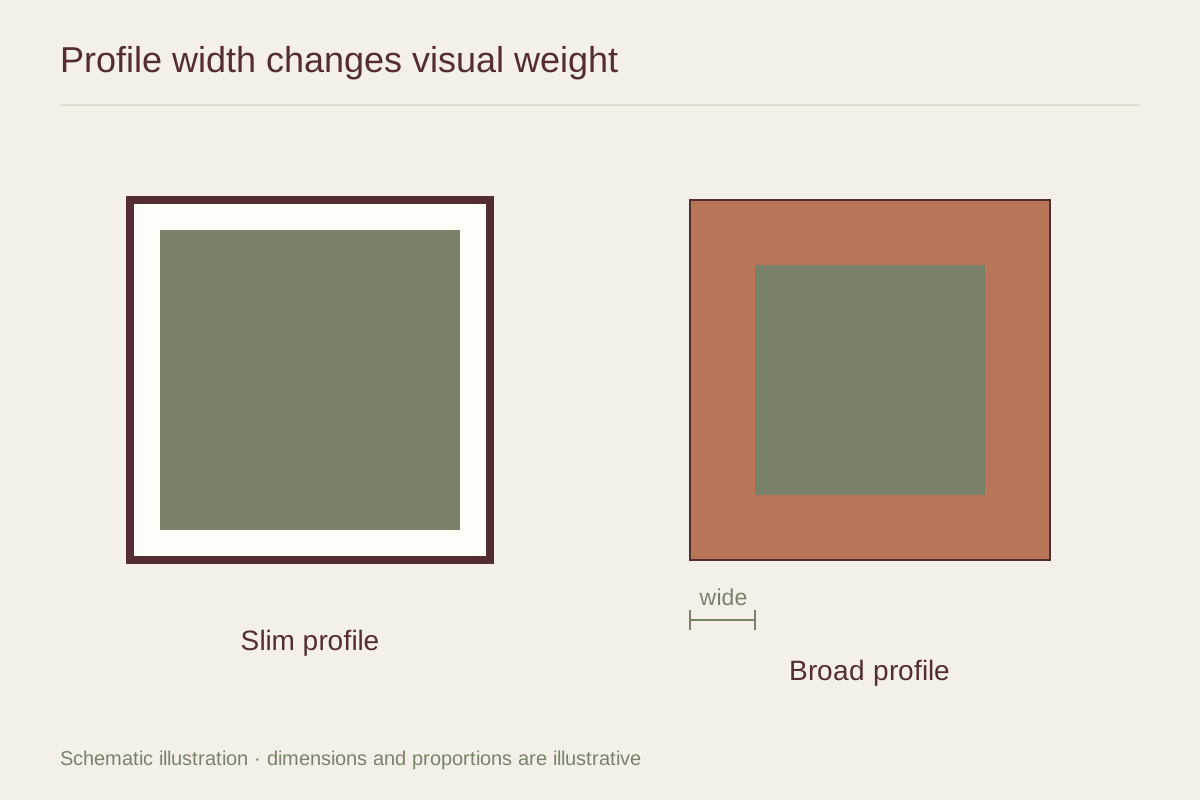
A wide molding adds more wall area than its face width may suggest. A small print with a mat and a broad frame can become a substantial object. Measure the finished outside size and make a template before deciding that the print itself is too small for the wall.
A narrow profile can make a large photograph feel less enclosed, but structural needs still matter. The frame must support the glazing and contents at that scale. Ask the framer which profiles are appropriate rather than assuming the slimmest visible edge is always available for every size.
Read the line around the picture
A thin dark frame acts like a drawn outline. A wide dark frame creates a field of color. That difference is especially strong around pale artwork. A broad pale frame may feel less heavy than a narrow black one, so compare tone and width together instead of treating width as the only variable.
The mat changes the relationship too. A wide mat inside a very narrow frame can feel open and restrained. A wide frame with little mat can bring the material close to the image. Make both combinations with corner samples; a single molding sample without the mat rarely tells the whole story.
Use width to establish hierarchy
In a group of pictures, the broadest frame can signal the main piece, even if its image is not the largest. Repeating the same width throughout creates a different, more even rhythm. Decide whether one work should lead before choosing the individual frames.
Inspect the arrangement from the doorway and from a nearby seat. At a distance, the outer shape and contrast do most of the work. Up close, carved detail, grain, and the joinery become visible. A successful profile makes sense in both views, with enough physical strength for the object and enough visual restraint for the picture you want to see.