Find the kind of humor you like
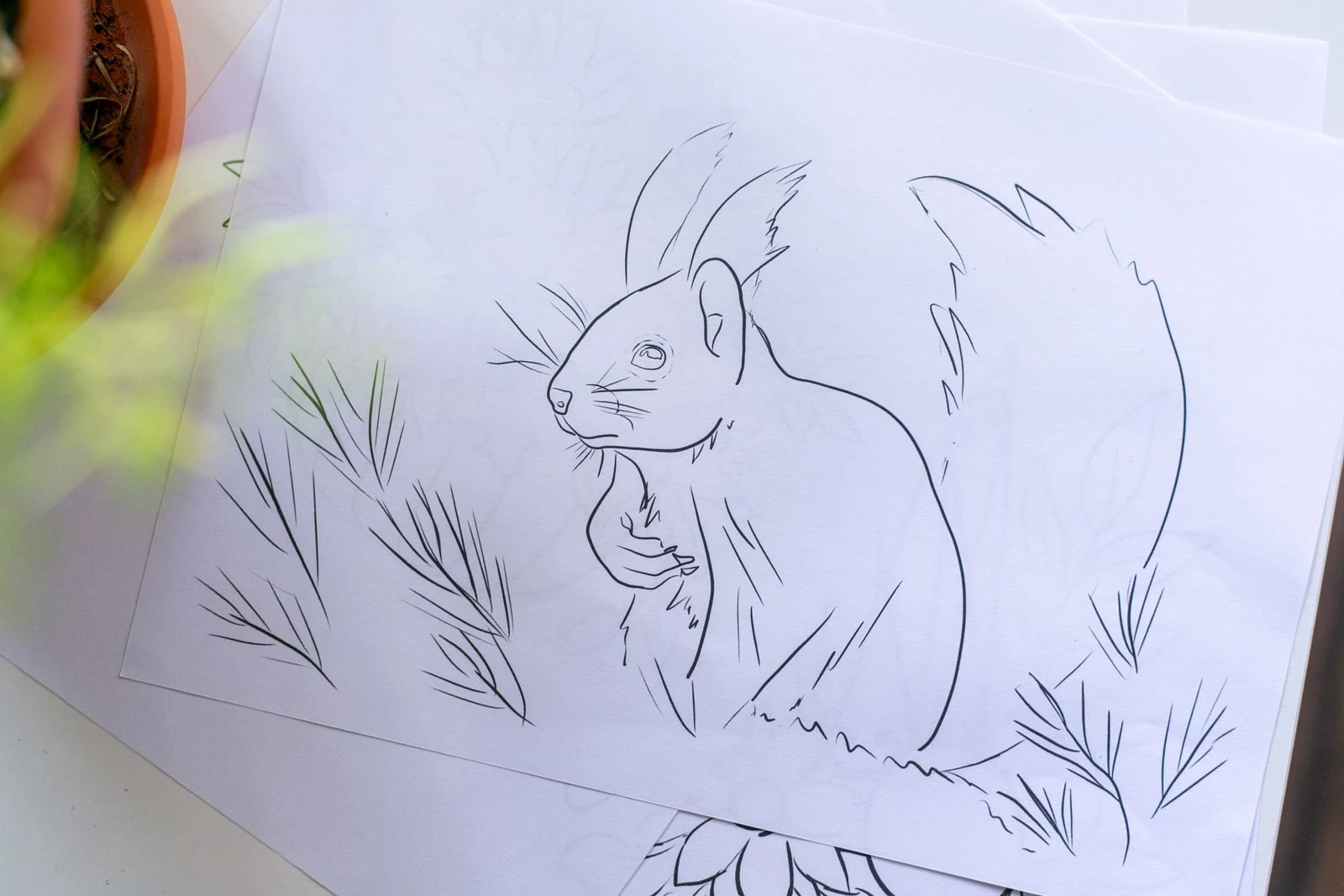
A fox reading a newspaper carries a different tone from a boldly simplified bird or a solemn dog in an oversized chair. Look for an expression, gesture, or visual joke that continues to interest you after the first glance. A room can accommodate playfulness without needing a collection of novelty objects.
Give it an adult scale
A tiny illustration in a large blank area can look incidental. A substantial print or a small image with a deliberate mat can give the work presence. Compare the outside frame size with the furniture below it, while remembering that a broad mat does not enlarge a very fine drawing.
Choose a close-view position if the humor depends on a small detail. Beside a reading chair or desk, a subtle expression can be discovered naturally. Across a large living room, a stronger silhouette or simpler composition may communicate better.
Use the frame to set the tone
A restrained wood or dark painted frame can make a playful drawing feel considered. A brightly colored frame may work too, but it adds another comic or decorative note. Decide which element should carry the personality rather than making every layer equally expressive.
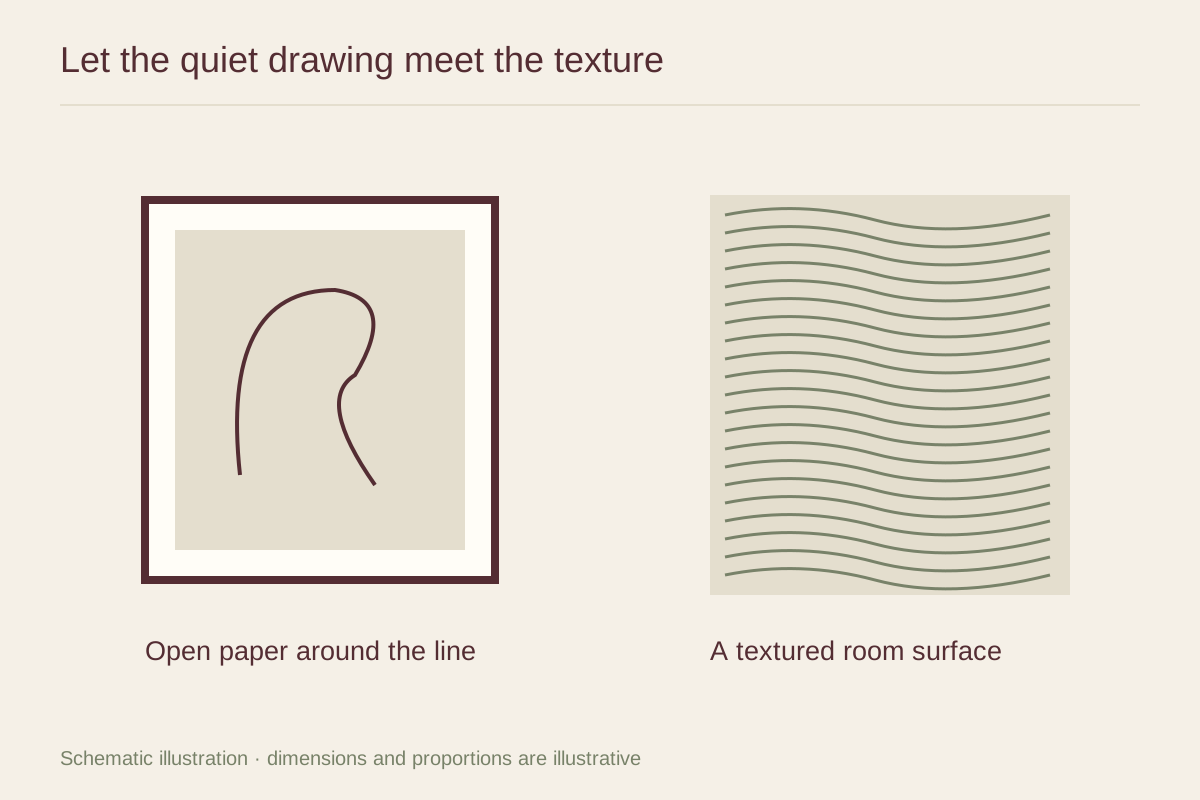
The mat can connect the image to the paper tone and provide breathing room around a busy character. Avoid a childish association merely through automatic choices such as candy-colored borders if that is not what you want; the artwork itself can remain amusing within a quieter presentation.
Let other objects stay ordinary
A whimsical cat print does not require cat-shaped cushions or a matching mug display. Pair it with books, a lamp, and furniture chosen for the room's use. One repeated color from the illustration may be enough to connect it to the setting.
In a shared room, choose humor that everyone who uses the space enjoys. A character that feels charming to one person may be distracting to another. Test a small preview in the proposed location for a few days before committing to a large version.