Photograph the package before opening
If the box or tube is crushed, wet, punctured, or visibly bent, take clear photographs before removing the contents. Keep the label and order information available. Open the package according to the seller's instructions, with cutting tools kept well away from the print and any inner wrap.
Do not discard protective materials immediately. They may be useful if the seller requests a return or needs to understand how the damage occurred. If the package is damp or the print appears stuck to wrapping, stop pulling at it and contact the supplier. A forceful unwrapping can turn a shipping problem into a larger loss.
Support the sheet
Use a clean, dry surface large enough for the whole print, with food and drinks elsewhere. Handle a stable sheet by its edges and keep it supported rather than holding a large print by two corners. Follow the printer's instructions for delicate coatings or photographic surfaces.
For a rolled print, do not force it flat simply to inspect it. Look at the visible portions carefully and follow the supplied unrolling guidance. A valuable, brittle, or damaged rolled work needs professional assessment. Heat, moisture, and reverse rolling are not general inspection tools.
Check the order against the object
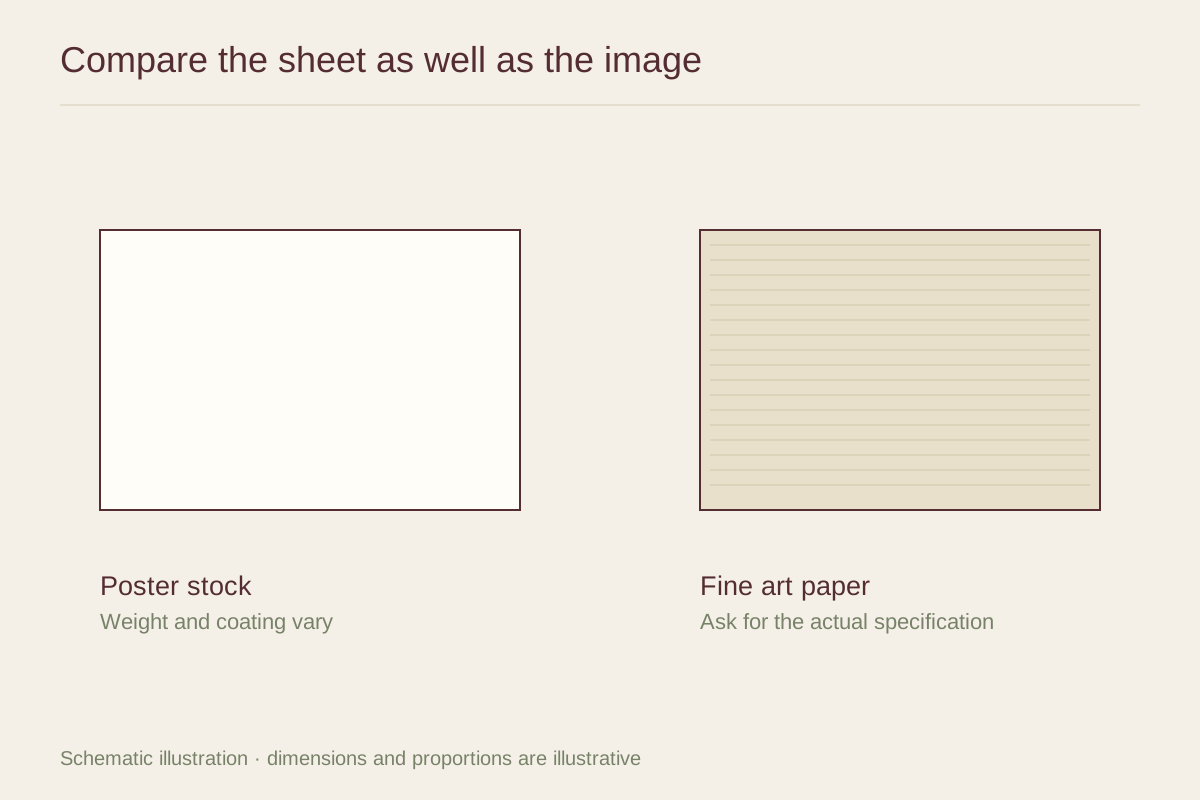
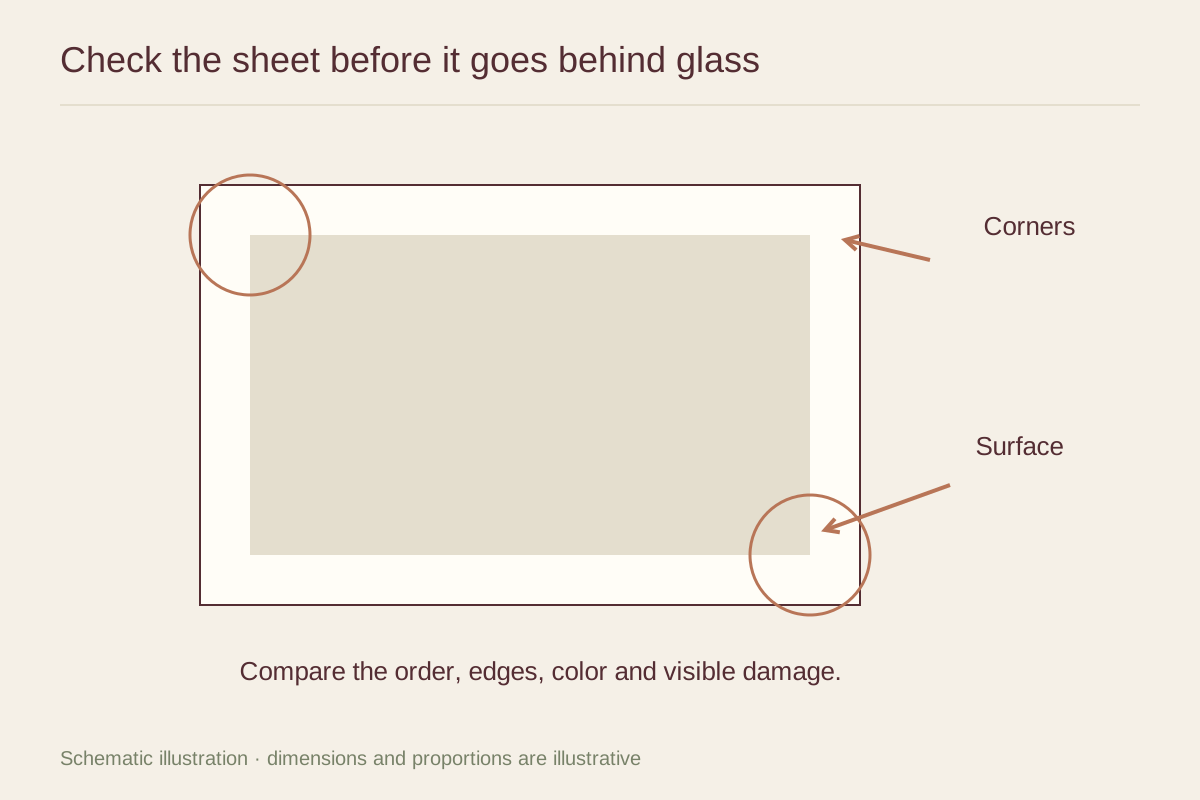
Confirm the title or image, orientation, full sheet dimensions, and any printed border. Compare the delivered crop with the approved preview. Check whether signatures, captions, or edition details promised in the listing are present, while avoiding assumptions about authenticity from appearance alone.
Measure on a supported surface without dragging a ruler across the image. Distinguish the image area from the complete paper. If you ordered a framed-size sheet but received a smaller image with a border, the numbers may be correct even though your expectation differed. Use the original listing or confirmation to establish what was specified.
Examine the surface in ordinary light
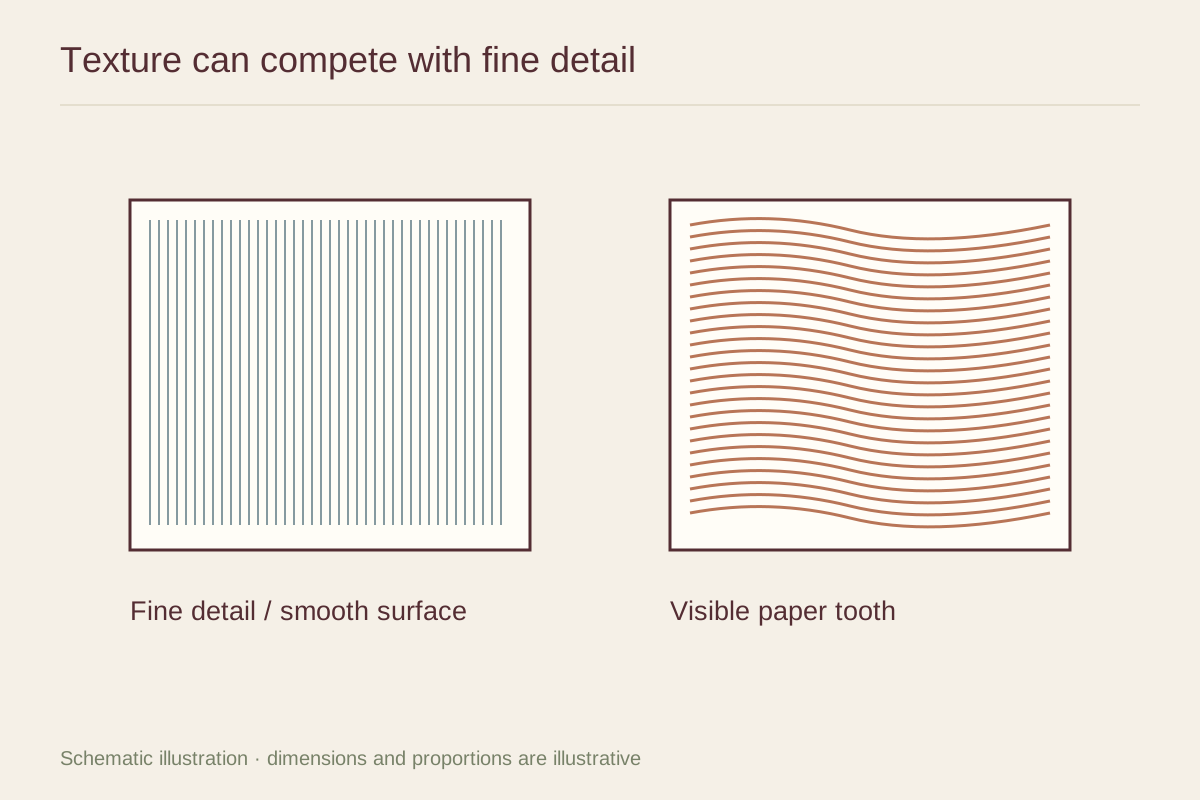
Look for creases, abrasions, dents, fingerprints, banding, unexpected spots, or damaged corners. View the sheet from a slight angle to identify surface marks, but avoid intense prolonged lighting or repeated handling. A paper's intended texture should not be mistaken for a production defect; compare with the product description and sample.
Check the areas most important to the image: faces, fine type, smooth skies, dark gradients, and sharp architectural edges. If a mark might belong to the original artwork, compare it with the listing image or ask the seller. Do not attempt to rub it away before establishing what it is.
Evaluate color with reasonable expectations
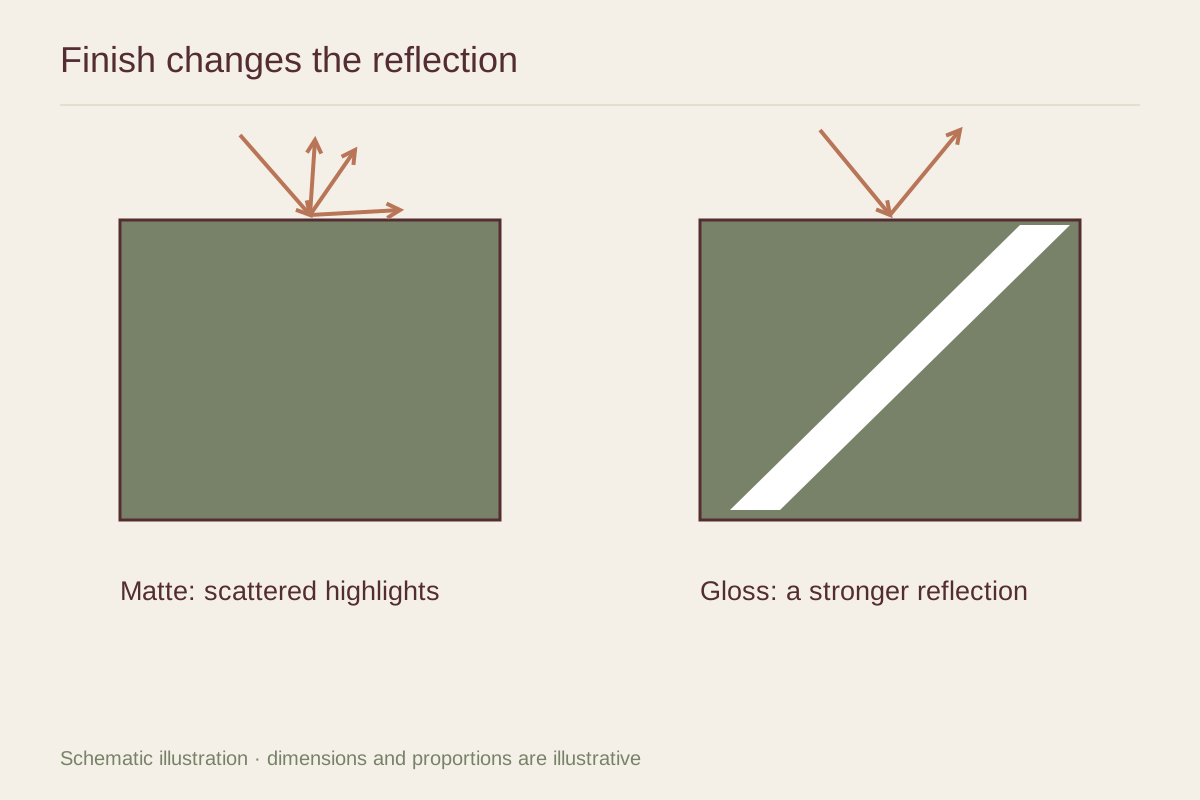
A print will not look exactly like every phone display. Assess whether the color relationships, shadow detail, and paper finish match the approved proof or the seller's description. If you have a physical proof, compare under the same light rather than comparing one in sunlight with the other under a warm lamp.
Document a concern with a full view and a close view, plus a concise description of its location. A photo alone may not capture subtle color differences, so explain what you see. Include the order number and relevant specification when contacting the seller, and keep the print protected while the issue is resolved.
Approve it before framing changes it
Do not trim, mount, or apply adhesive to a print while a delivery concern is unresolved. Those changes can make a return harder and may conceal the original condition. A framer can inspect a print with you before work begins, especially if you are uncertain about a surface or edge.
Once the print is accepted, save the packaging photographs and product details with the receipt. Then brief the framer about the parts that must remain visible and any care instructions provided by the printer. The inspection creates a clear starting point for the next stage instead of leaving a hidden problem to be discovered behind glazing.